
Korean food is a delightful mix of bold flavors, fresh ingredients, and comforting dishes. From the tangy crunch of kimchi to the savory goodness of bulgogi, these recipes are perfect for anyone looking to bring a taste of Korea to their kitchen. Grab your apron and let’s whip up some mouthwatering meals!
Bulgogi: Marinated Beef Delight
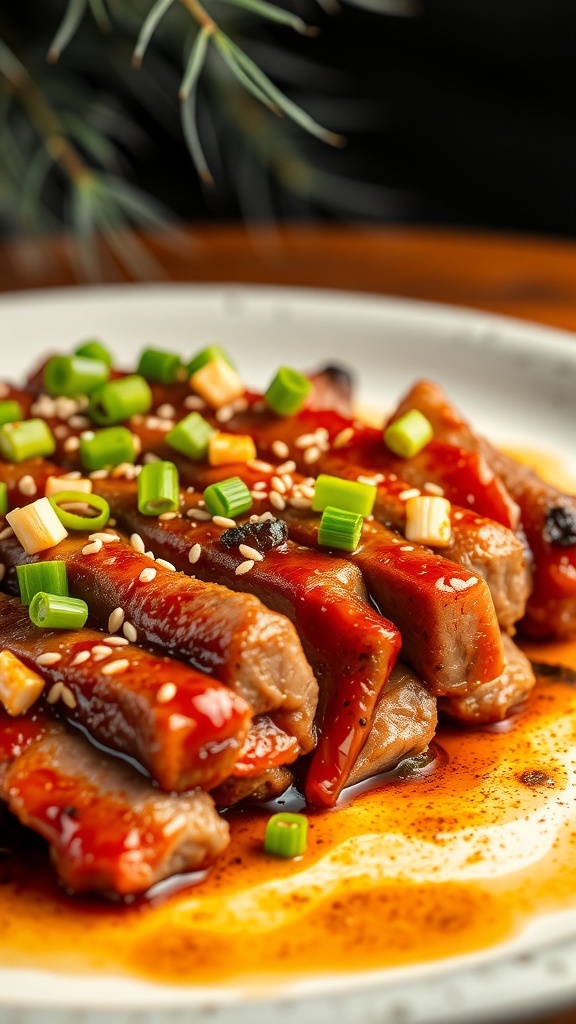
Bulgogi is a classic Korean dish that showcases marinated beef, grilled to perfection. The image captures beautifully cooked strips of beef, glistening with a rich sauce. Topped with fresh green onions and sesame seeds, it looks as delicious as it tastes.
The marinade typically includes soy sauce, sugar, sesame oil, garlic, and pepper, giving the beef a sweet and savory flavor. This dish is not just a meal; it’s a celebration of Korean cuisine.
To make bulgogi, start with thinly sliced beef, preferably ribeye or sirloin. Marinate it for at least 30 minutes, or longer for deeper flavor. Grill or stir-fry the beef until it’s nicely browned. Serve it with rice and side dishes for a complete experience.
Japchae: Sweet Potato Noodle Stir-Fry
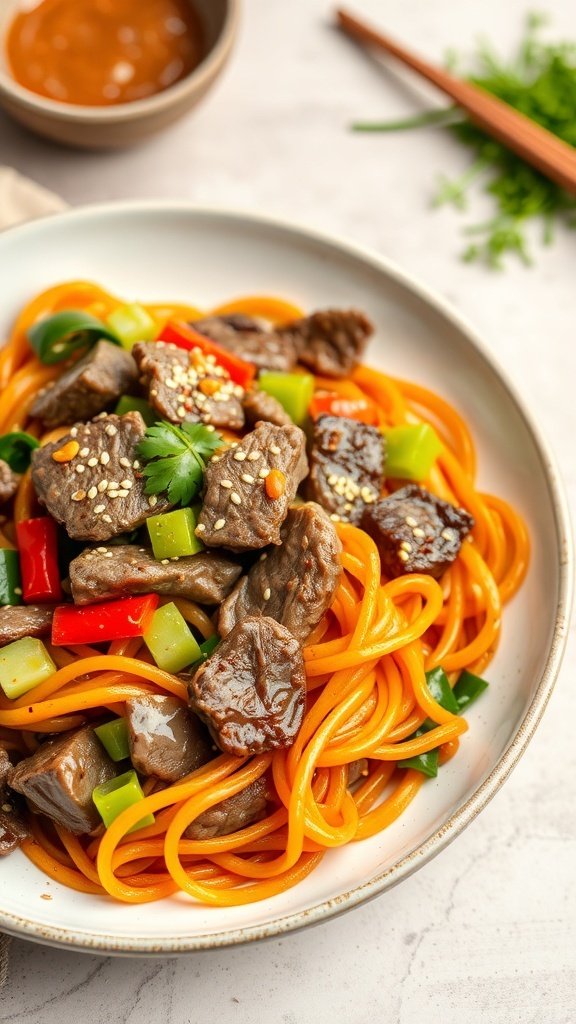
Japchae is a delightful Korean dish that features sweet potato noodles, also known as glass noodles. These noodles have a unique chewy texture that pairs perfectly with a variety of ingredients.
The image shows a vibrant plate of japchae, filled with colorful vegetables like red and green bell peppers, along with tender pieces of beef. The dish is garnished with sesame seeds and fresh herbs, adding a nice touch of flavor and presentation.
To make japchae, you’ll need sweet potato noodles, beef, bell peppers, onions, and a savory sauce made from soy sauce, sesame oil, and sugar. Start by cooking the noodles according to package instructions. Stir-fry the beef and vegetables in a hot pan, then combine everything with the noodles and sauce. Toss it all together until well mixed.
This dish is not only tasty but also visually appealing, making it a great choice for gatherings or a cozy dinner at home. Enjoy the sweet and savory flavors in every bite!
Tteokbokki: Spicy Rice Cakes

Tteokbokki is a popular Korean street food that features chewy rice cakes in a spicy sauce. The dish is often served with fish cakes and garnished with green onions, making it a delightful treat.
The image shows a bowl of tteokbokki, where the rice cakes are bathed in a vibrant red sauce. The bright color hints at the spiciness, while the green onions add a fresh touch. This dish is not only visually appealing but also packed with flavor.
To make tteokbokki, you’ll need rice cakes, gochujang (Korean chili paste), fish cakes, and green onions. Start by boiling the rice cakes until they are soft. Then, mix gochujang with water to create the sauce. Combine everything in a pan and cook until heated through. Top with chopped green onions for a burst of freshness.
This dish is perfect for sharing with friends or enjoying as a late-night snack. Its spicy kick and chewy texture make it a favorite among many. Give it a try, and you might find yourself craving it often!
Kimchi Jjigae: Spicy Kimchi Stew

Kimchi Jjigae is a beloved Korean stew that packs a punch with its spicy and savory flavors. The image shows a steaming bowl filled with vibrant red broth, tender pieces of kimchi, tofu, and meat, all topped with fresh green onions. This dish is not just a meal; it’s a comforting hug in a bowl.
To make this delicious stew, you’ll need a few key ingredients. Start with some well-fermented kimchi, which gives the stew its signature flavor. You’ll also want pork belly or beef, tofu, and a mix of seasonings like gochugaru (Korean red pepper flakes) and soy sauce. Don’t forget the green onions for garnish!
Cooking Kimchi Jjigae is simple. Begin by sautéing the meat in a pot until it’s browned. Add the kimchi and cook for a few minutes to release its flavors. Then, pour in water or broth and let it simmer. Finally, add the tofu and seasonings, letting everything meld together for a rich, hearty stew. Serve it hot with a side of rice, and enjoy!
Kimchi Pancakes: Savory and Crispy

Kimchi pancakes are a delicious way to enjoy the unique flavors of Korean cuisine. The image shows a stack of golden-brown pancakes topped with vibrant green scallions. A rich sauce drips down the side, adding a tempting touch. These pancakes are crispy on the outside and soft on the inside, making them a perfect snack or appetizer.
To make kimchi pancakes, you’ll need a few simple ingredients. Start with chopped kimchi, flour, and water. You can also add scallions for extra flavor. Mix everything together to form a batter. Heat a pan with a little oil, then pour in the batter to cook until golden brown.
Serve your pancakes hot, drizzled with a soy-based sauce for dipping. They are great for sharing or enjoying solo. Whether you’re a fan of Korean food or just looking to try something new, kimchi pancakes are a must-try!
Korean Fried Chicken: Crispy and Flavorful

Korean fried chicken is a delightful treat that stands out for its crispy texture and bold flavors. The image showcases perfectly fried chicken pieces, glistening with a rich sauce and topped with sesame seeds and green onions. This dish is not just about taste; it’s a feast for the eyes too!
To make this delicious dish, you’ll need some key ingredients. Start with chicken wings or drumsticks, flour, cornstarch, and a mix of spices for the batter. The sauce typically includes gochujang (Korean chili paste), soy sauce, garlic, and a touch of sweetness. These elements come together to create a dish that’s both crunchy and packed with flavor.
The cooking process is simple. First, marinate the chicken to infuse it with flavor. Then, coat it in a mixture of flour and cornstarch for that signature crunch. Fry the chicken until golden brown and crispy. Finally, toss it in the sauce and garnish with sesame seeds and chopped green onions. Serve it hot, and enjoy the crispy goodness!
Bibimbap: A Colorful Rice Bowl

Bibimbap is a delightful Korean dish that brings together a variety of flavors and textures in one bowl. This colorful rice bowl is not just a feast for the eyes but also a treat for the taste buds. The image shows a beautifully arranged bowl filled with rice, fresh vegetables, and a perfectly fried egg on top.
The ingredients typically include cooked rice, sautéed vegetables like spinach, carrots, and bell peppers, along with some protein such as beef or tofu. The fried egg adds a rich creaminess, while gochujang, a spicy red pepper paste, gives it a kick. Fresh herbs like cilantro can enhance the flavors even more.
To make bibimbap, start by cooking your rice and preparing your vegetables. Sauté each vegetable separately to keep their flavors distinct. Once everything is ready, layer the rice at the bottom of a bowl, add the vegetables and protein on top, and finish with the fried egg. Drizzle some gochujang and garnish with herbs for that extra touch.
This dish is not only delicious but also allows for creativity. You can customize it with your favorite ingredients or whatever you have on hand. Bibimbap is perfect for a quick meal or a gathering with friends. Enjoy the vibrant colors and flavors that make this dish a true Korean classic!
Sundubu Jjigae: Silken Tofu Stew

Sundubu Jjigae is a warm and comforting Korean stew that features silken tofu as its star ingredient. The dish is known for its rich flavors and hearty texture. In the image, you can see a bubbling pot filled with soft tofu, a perfectly cooked egg, and vibrant red chili peppers, all swimming in a savory broth.
This stew is not only delicious but also easy to make. The combination of ingredients creates a delightful harmony. You’ll find silken tofu, vegetables, and sometimes seafood or meat, all simmered together to create a satisfying meal.
To make Sundubu Jjigae, gather your ingredients: silken tofu, gochujang (Korean chili paste), garlic, onion, and your choice of protein. Start by sautéing the garlic and onion, then add in the gochujang and your protein. Pour in water or broth, bring it to a boil, and gently add the tofu. Let it simmer, and finish with an egg on top for that creamy richness.
This dish is perfect for a cozy night in or when you need a little comfort food. Serve it hot with a side of rice, and enjoy the warmth it brings!
Galbi: Grilled Short Ribs
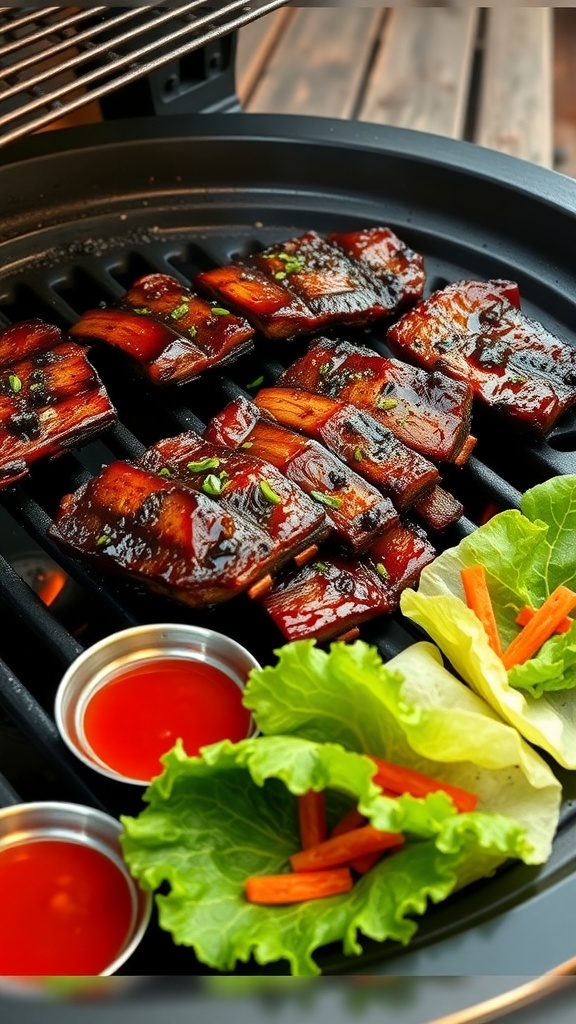
Galbi, or grilled short ribs, is a beloved dish in Korean cuisine. The image showcases beautifully grilled pieces of meat, glistening with a rich marinade. The ribs are perfectly cooked, showing off their tender texture and smoky flavor. Surrounding the meat are fresh lettuce leaves and vibrant carrots, ready to wrap around the juicy ribs for a delightful bite.
To make galbi, you’ll need a few key ingredients. Start with beef short ribs, soy sauce, sugar, garlic, sesame oil, and green onions. Marinate the ribs for several hours, allowing the flavors to soak in. When you’re ready, grill them until they’re caramelized and slightly charred.
Serving galbi is just as fun as cooking it. Use the lettuce leaves to create wraps, adding a bit of the meat, some carrots, and a drizzle of sauce. Each bite is a burst of flavor, combining the savory meat with the crunch of fresh veggies. This dish is perfect for gatherings, bringing everyone together around the grill.
Kimchi: The Fermented Staple

Kimchi is a beloved dish in Korean cuisine, known for its unique flavors and health benefits. The image shows a jar filled with vibrant, colorful vegetables, showcasing the beautiful mix of ingredients that go into making this staple. The bright reds and purples of the cabbage and peppers are eye-catching, hinting at the bold taste that awaits.
This fermented dish typically includes napa cabbage, radishes, garlic, ginger, and a blend of spices, all packed into a jar. The fermentation process not only enhances the flavors but also adds probiotics, making kimchi a great addition to any meal. It’s often enjoyed as a side dish or used in various recipes, from fried rice to stews.
Making kimchi at home is simple and rewarding. Start by chopping the vegetables and mixing them with salt to draw out moisture. After a few hours, rinse them and combine with a spicy paste made from gochugaru (Korean chili flakes), garlic, and ginger. Pack everything tightly into a jar and let it ferment at room temperature for a few days before moving it to the fridge. The result is a tangy, spicy treat that gets better with time!
Korean Corn Cheese: Cheesy Snack

Korean Corn Cheese is a delightful dish that combines sweet corn with gooey cheese, making it a perfect snack or side dish. The image shows a bubbling, cheesy mixture topped with fresh green onions. It’s visually appealing and promises a burst of flavor in every bite.
This dish is simple to prepare and is loved by many for its comforting taste. The combination of corn and cheese creates a creamy texture that is hard to resist. Whether you’re enjoying it at a gathering or as a late-night snack, it’s sure to please.
To make Korean Corn Cheese, you’ll need just a few ingredients. Gather sweet corn, cheese (like mozzarella or cheddar), mayonnaise, and green onions. Mix the corn with mayonnaise, spread it in a baking dish, and top it with cheese. Bake until the cheese is melted and golden. Finally, sprinkle with chopped green onions for a fresh touch.
This cheesy snack is not only delicious but also easy to customize. You can add spices or even some chili for a kick. Enjoy it with friends or family, and watch it disappear!
Korean Spicy Noodles: Jajangmyeon

Jajangmyeon is a beloved Korean dish that features thick noodles topped with a rich black bean sauce. The image shows a bowl of these noodles, beautifully presented with diced tofu, green onions, and cucumber slices. The contrast of colors makes it visually appealing and mouthwatering.
To make Jajangmyeon, you’ll need a few key ingredients. Start with fresh noodles, black bean paste, diced tofu, and some vegetables like zucchini and onions. The sauce is the star, combining the black bean paste with a bit of sugar and soy sauce for depth.
Cooking is straightforward. First, fry the diced tofu until golden. Then, sauté the vegetables before adding the black bean paste and water to create the sauce. Cook the noodles separately, then mix everything together. Serve hot, garnished with cucumber and green onions for a refreshing crunch.
This dish is perfect for a cozy meal at home or impressing friends at a dinner party. Enjoy the delightful flavors of Jajangmyeon!
Seafood Pajeon: Savory Korean Pancake

Seafood pajeon is a delightful Korean pancake that brings together fresh seafood and a crispy texture. The image showcases a beautifully cooked pajeon topped with shrimp and green onions, served with a rich dipping sauce. The golden edges and soft center make it look irresistible.
This dish is perfect for sharing and can be enjoyed as a snack or a main course. The combination of seafood and vegetables creates a burst of flavor in every bite. It’s a great way to enjoy the taste of the sea in a comforting format.
To make your own seafood pajeon, you’ll need ingredients like flour, water, eggs, and a mix of seafood such as shrimp and squid. Start by mixing the batter and adding your seafood and green onions. Cook it on a hot skillet until golden brown, and serve it with a soy-based dipping sauce for an extra kick.
Korean Egg Bread: Gyeran-ppang

Korean egg bread, or gyeran-ppang, is a delightful street food that combines fluffy bread with a perfectly cooked egg. The image shows a golden-brown bread cup, cradling a sunny-side-up egg, with a hint of ketchup for added flavor. Next to it, a piece of the bread is spread with creamy mayonnaise, making it even more tempting.
This dish is not just tasty; it’s also fun to make. You can enjoy it for breakfast or as a snack. The combination of textures from the soft bread and the runny yolk creates a satisfying bite.
To make gyeran-ppang, you’ll need simple ingredients: bread, eggs, and your choice of toppings like cheese or vegetables. Start by cutting a hole in the bread, then crack an egg into it. Bake until the egg is set, and the bread is golden. Serve it warm for the best experience!
Doenjang Jjigae: Fermented Soybean Stew
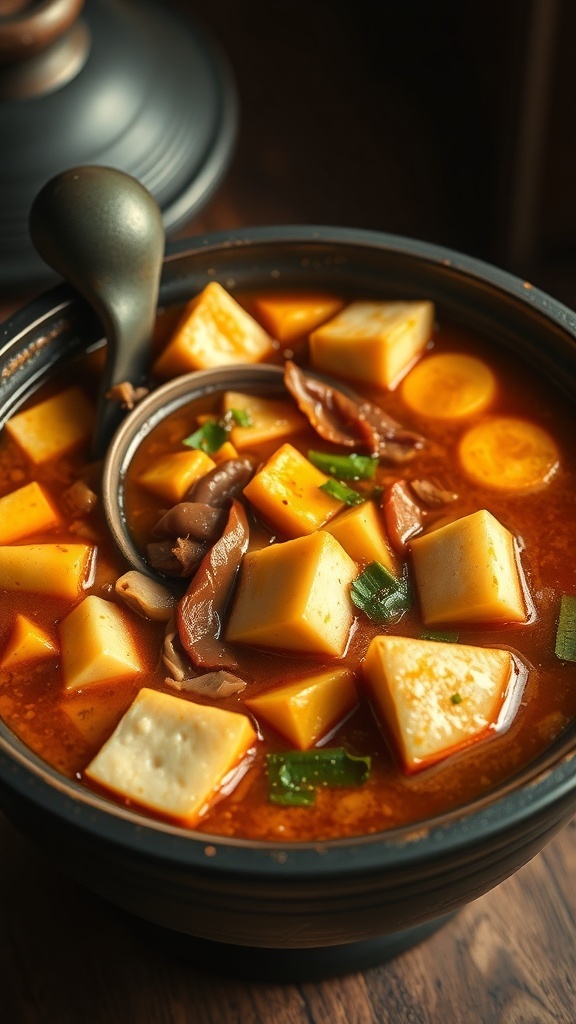
Doenjang Jjigae is a beloved Korean stew that warms both the body and soul. The image showcases a steaming bowl filled with rich, flavorful broth, chunks of tofu, and vibrant vegetables. This dish is not just a meal; it’s a comforting hug in a bowl.
The main ingredient, doenjang, is a fermented soybean paste that gives the stew its deep umami flavor. The combination of tofu, mushrooms, and green onions adds texture and freshness. It’s a staple in many Korean households and often served with rice.
To make Doenjang Jjigae, you’ll need the following ingredients: doenjang, tofu, zucchini, mushrooms, green onions, garlic, and water or broth. Start by boiling the water or broth, then add the doenjang and stir until dissolved. Next, toss in the vegetables and tofu, letting everything simmer until tender. Finish with a sprinkle of green onions for a pop of color.
This stew is perfect for a cozy night in or to share with friends. It’s easy to make and packed with nutrients, making it a go-to recipe for any occasion.
Korean BBQ: An Interactive Dining Experience
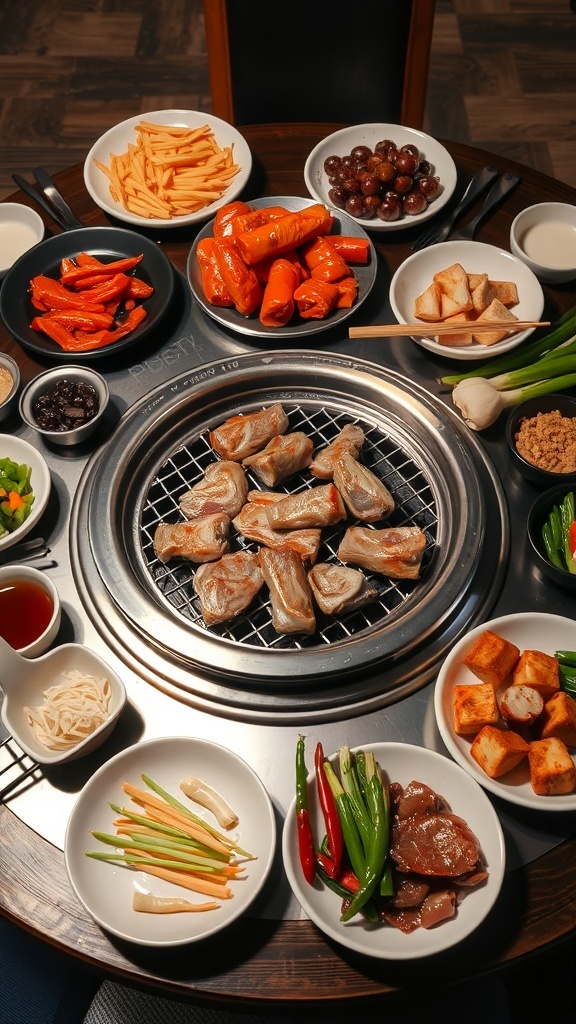
Korean BBQ is more than just a meal; it’s a fun and interactive way to enjoy food with friends and family. The image shows a vibrant spread of ingredients, all ready for grilling. In the center, you can see marinated meats sizzling on the grill, filling the air with mouthwatering aromas.
Surrounding the grill are various side dishes, known as banchan. These include colorful vegetables, spicy peppers, and savory sauces. Each item adds a unique flavor to the meal. Diners can customize their plates, mixing and matching ingredients to create their perfect bite.
To enjoy Korean BBQ at home, gather some essential ingredients. You’ll need thinly sliced meats like beef or pork, along with a variety of vegetables such as green onions and garlic. Don’t forget the dipping sauces! A simple mix of soy sauce, sesame oil, and chili paste can elevate the flavors.
Cooking is part of the fun. Grill the meat to your liking, then wrap it in lettuce leaves with some rice and banchan for a delicious bite-sized treat. This style of dining encourages conversation and laughter, making it a memorable experience.
Korean Soybean Sprout Salad: Kongnamul

Kongnamul, or Korean soybean sprout salad, is a refreshing dish that brings a burst of flavor to any meal. The image shows a vibrant bowl of this salad, featuring cooked soybean sprouts tossed with colorful vegetables. The bright green onions on top add a nice crunch and a pop of color.
This salad is not only tasty but also packed with nutrients. Soybean sprouts are rich in vitamins and minerals, making this dish a healthy choice. It’s often served as a side dish in Korean meals, complementing rice and other main dishes.
To make Kongnamul, you’ll need fresh soybean sprouts, garlic, sesame oil, and soy sauce. Start by boiling the sprouts until tender. Then, mix them with minced garlic, a drizzle of sesame oil, and a splash of soy sauce. Toss everything together and garnish with chopped green onions. It’s simple and quick!
This salad is perfect for those looking to try something new or add a healthy side to their dinner. Enjoy the crunchy texture and the delightful flavors of Kongnamul!
Korean Sweet Potato: Roasted Delight
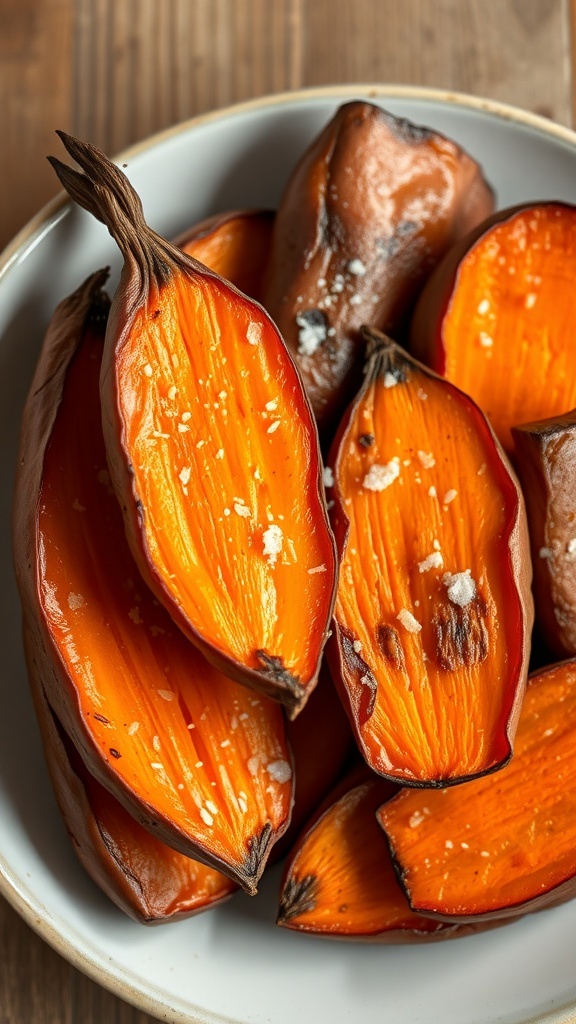
Korean sweet potatoes are a true treat, especially when roasted. The image shows beautifully roasted sweet potatoes, their vibrant orange flesh peeking through the charred skin. This dish is simple yet satisfying, making it a favorite in many Korean households.
To make roasted Korean sweet potatoes, you only need a few ingredients: fresh sweet potatoes and a sprinkle of salt. Start by washing the sweet potatoes thoroughly. You can roast them whole or cut them in half for quicker cooking. Place them in a preheated oven at 400°F (200°C) for about 45 minutes to an hour, depending on their size. The goal is to achieve a soft, tender texture.
Once they are done, let them cool for a few minutes. A pinch of salt enhances their natural sweetness. Enjoy them as a snack or a side dish. They are perfect for any time of the day!
Korean Cold Noodles: Naengmyeon

Naengmyeon is a refreshing Korean dish perfect for hot days. This cold noodle dish features chewy, thin noodles served in a chilled broth. The image shows a bowl of naengmyeon, highlighting the smooth noodles, vibrant egg, and fresh garnishes.
The broth is usually made from beef or dongchimi (radish water kimchi), giving it a unique flavor. Toppings like sliced cucumbers, boiled eggs, and sometimes beef or pickled radish add texture and taste.
To make naengmyeon at home, you’ll need ingredients like buckwheat noodles, beef broth, and your choice of toppings. Start by cooking the noodles until they’re tender, then rinse them in cold water. Prepare the broth and chill it. Finally, assemble your bowl with noodles, broth, and toppings for a delightful meal.
Banchan: Traditional Side Dishes

Banchan are small side dishes served with Korean meals. They add variety and flavor to the dining experience. In the image, you can see a colorful spread of banchan, showcasing different textures and ingredients. Each dish has its own unique taste, making the meal more enjoyable.
The selection includes items like pickled vegetables, tofu, and stir-fried dishes. These sides are often made with fresh ingredients and can be enjoyed with rice or on their own. Common banchan include kimchi, seasoned spinach, and sweet potato noodles.
Preparing banchan at home is simple. For a basic kimchi, you’ll need napa cabbage, Korean chili powder, garlic, and fish sauce. Mix these ingredients and let them ferment for a few days. This adds a tangy flavor that complements many main dishes.
When serving banchan, it’s traditional to present them in small bowls. This allows everyone at the table to share and enjoy a variety of flavors. It’s a great way to experience the richness of Korean cuisine.
Korean Pumpkin Porridge: Hobakjuk

Korean pumpkin porridge, known as hobakjuk, is a warm and comforting dish that’s perfect for any time of the year. The image shows a creamy bowl of hobakjuk topped with a drizzle of honey and sprinkled with sesame seeds. The vibrant orange color of the porridge is inviting, making it hard to resist.
This dish is made primarily from pumpkin, which gives it a naturally sweet flavor. The texture is smooth and velvety, making it a delightful treat. It’s often enjoyed as a breakfast option or a light snack. The small pumpkins in the background add a nice touch, reminding us of the main ingredient.
To make hobakjuk, you’ll need ingredients like pumpkin, glutinous rice flour, and water. Start by steaming the pumpkin until it’s soft, then blend it with water to create a smooth puree. Mix in the glutinous rice flour to thicken the porridge. Cook it on low heat, stirring frequently, until it reaches your desired consistency. Serve it warm, and don’t forget the honey and sesame seeds on top!
Korean BBQ Lettuce Wraps: Ssam

Korean BBQ lettuce wraps, known as Ssam, are a fun and tasty way to enjoy a meal. The image shows vibrant green lettuce leaves filled with delicious ingredients. Each wrap is packed with grilled meat, rice, and a drizzle of sauce, making them both colorful and appetizing.
To make Ssam, you’ll need a few key ingredients. Start with fresh lettuce leaves, like romaine or butter lettuce, which are perfect for wrapping. For the filling, grilled pork or beef works wonderfully. Don’t forget the rice, which adds a nice texture. Top it off with some spicy sauce and chopped green onions for extra flavor.
Making Ssam is simple. First, grill your choice of meat until it’s cooked through and slightly charred. While the meat is cooking, prepare your rice and chop the green onions. Once everything is ready, take a lettuce leaf, add a scoop of rice, a piece of meat, and a drizzle of sauce. Wrap it up and enjoy!
This dish is great for gatherings or a casual dinner. Everyone can customize their own wraps, making it a fun and interactive meal. Ssam is not just delicious; it’s also a great way to share food and enjoy time with friends and family.
Spicy Pork Stir-Fry: Daeji Bulgogi

Daeji Bulgogi is a popular Korean dish that brings a delightful kick to your meal. This spicy pork stir-fry is not just tasty but also visually appealing. The image shows tender pieces of marinated pork, perfectly cooked and glistening with a rich sauce. Bright green peppers and juicy tomatoes add color and freshness to the dish, making it even more inviting.
This dish is typically served over a bed of fluffy white rice, which balances the spiciness of the pork. The combination of flavors and textures makes Daeji Bulgogi a favorite among many. It’s a great option for a quick weeknight dinner or a special occasion.
To make Daeji Bulgogi, you will need ingredients like pork belly, gochujang (Korean red chili paste), soy sauce, garlic, and sesame oil. Start by marinating the pork in a mixture of these ingredients to infuse it with flavor. Then, stir-fry the marinated pork with vegetables until everything is cooked through and well combined.
Serve it hot over rice, and enjoy the spicy, savory goodness of this classic Korean dish!
Chili Paste: Gochujang Essentials
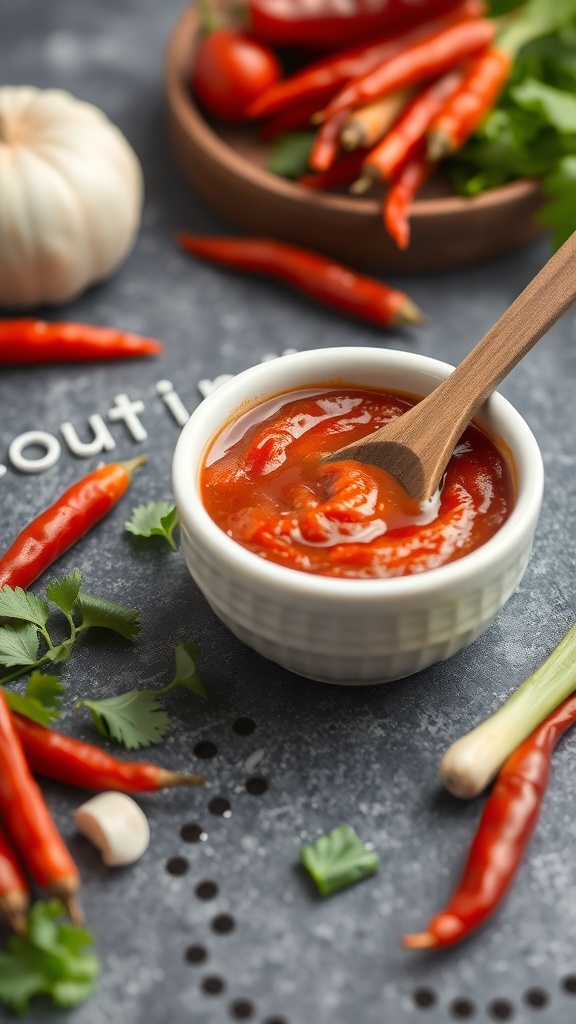
Gochujang is a staple in Korean cooking, known for its rich flavor and vibrant color. This chili paste combines fermented soybeans, glutinous rice, and red chili powder, creating a unique taste that’s both spicy and slightly sweet.
The image shows a bowl of gochujang surrounded by fresh ingredients like red chilies, garlic, and cilantro. These elements highlight the freshness and bold flavors that gochujang brings to dishes.
To make your own gochujang, you’ll need 1 cup of red chili powder, 1/2 cup of fermented soybean paste, 1/2 cup of glutinous rice flour, and 1/4 cup of water. Mix these ingredients together until smooth, then store in a jar. Let it sit for a few days to develop its flavor.
Using gochujang is easy! Add it to stews, marinades, or even as a dip. It’s perfect for enhancing the taste of grilled meats or vegetables. You can also mix it with sesame oil and vinegar for a quick dressing.
Korean Meatballs: Tteokgalbi

Tteokgalbi is a delicious Korean meatball dish that brings a burst of flavor to your table. These meatballs are made with minced meat, usually beef or pork, mixed with various seasonings and shaped into small patties. The image shows a plate piled high with these savory treats, glistening with a rich sauce and topped with sesame seeds.
To make tteokgalbi, you’ll need ingredients like ground meat, garlic, soy sauce, and sesame oil. Start by mixing the meat with the seasonings and forming them into patties. Then, grill or pan-fry them until they’re cooked through and caramelized on the outside. Serve them with a side of dipping sauce for an extra kick!
This dish is perfect for gatherings or a cozy family dinner. The combination of flavors makes it a hit with everyone. Enjoy tteokgalbi with rice or as part of a larger Korean meal!
Rice Cake Soup: Tteokguk

Tteokguk is a traditional Korean dish that holds a special place in the hearts of many. This comforting rice cake soup is often enjoyed during the Lunar New Year, symbolizing the start of a new year and the hope for good fortune.
The image showcases a bowl of Tteokguk, filled with soft, chewy rice cakes, vibrant green vegetables, and a perfectly cooked egg on top. The rich broth has a warm, inviting color, hinting at the delicious flavors within.
To make Tteokguk, you’ll need ingredients like sliced rice cakes, beef or chicken broth, green onions, and a few vegetables. Start by boiling the broth, then add the rice cakes and let them cook until tender. Finally, garnish with green onions and a soft-boiled egg for that extra touch.
This dish is not just about taste; it’s about tradition and family. Enjoying Tteokguk brings people together, making it a perfect meal for celebrations.
Traditional Korean Soup: Miyeok-guk

Miyeok-guk, or seaweed soup, is a beloved dish in Korean cuisine. This soup is often enjoyed on birthdays and during postpartum recovery, making it a dish rich in tradition and significance.
The image shows a vibrant bowl of Miyeok-guk, filled with tender seaweed, colorful vegetables, and rice. The seaweed, a key ingredient, is packed with nutrients and adds a unique flavor to the broth. The bright colors of the carrots and green onions make the dish visually appealing.
To make Miyeok-guk, you’ll need ingredients like dried seaweed, tofu, garlic, and beef or anchovy broth. Start by soaking the seaweed in water until it expands. Then, sauté garlic and add the soaked seaweed, followed by the broth. Let it simmer, and add tofu and seasoning to taste.
This soup is comforting and nourishing, perfect for any occasion. Whether you’re celebrating a birthday or just want a warm bowl of goodness, Miyeok-guk is a fantastic choice.
Spicy Tofu Stir-Fry: Dubu Jorim

Dubu Jorim is a delightful Korean dish that features tofu simmered in a spicy sauce. The image showcases a bowl filled with perfectly cubed tofu, drenched in a vibrant, spicy sauce. The bright colors of the sauce contrast beautifully with the creamy white tofu, making it visually appealing.
To make this dish, you’ll need ingredients like firm tofu, gochujang (Korean chili paste), soy sauce, garlic, and green onions. Start by cutting the tofu into cubes and pan-frying them until golden brown. In a separate pan, mix gochujang, soy sauce, and minced garlic to create the sauce. Add the tofu to the sauce and let it simmer for a few minutes. Finally, garnish with chopped green onions for that fresh touch.
This dish is not just tasty; it’s also healthy and packed with protein. Serve it with steamed rice for a complete meal. Dubu Jorim is perfect for a quick weeknight dinner or a cozy weekend meal with friends.
Korean Street Food: Hotteok
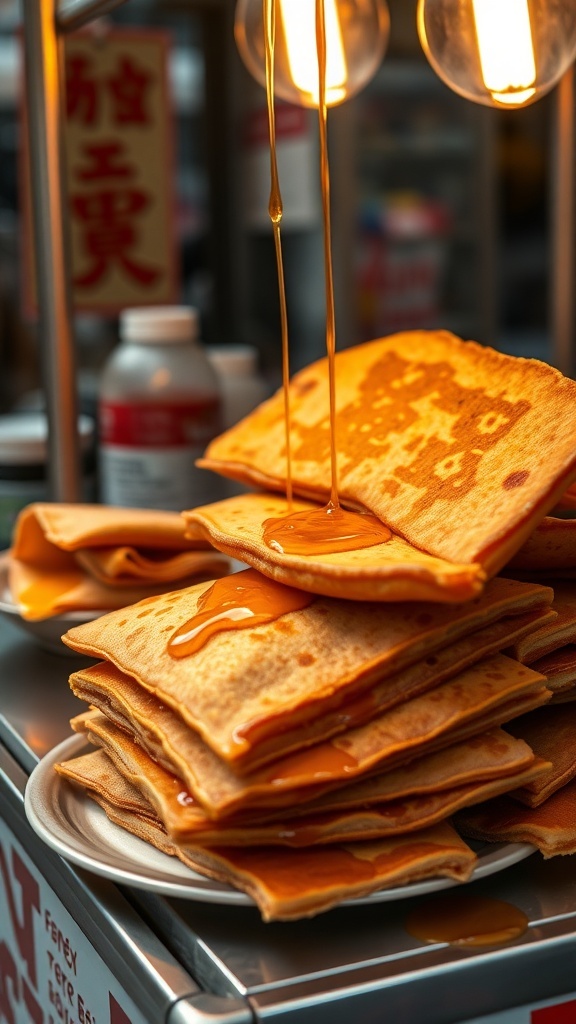
Hotteok is a popular Korean street food that brings warmth and sweetness to chilly days. This delightful treat is a type of filled pancake, often enjoyed as a snack or dessert. The image shows a stack of golden-brown hotteok, drizzled with a luscious syrup that adds to its appeal.
The dough is typically made from flour, water, and yeast, creating a soft and chewy texture. What makes hotteok special is the filling, which usually consists of brown sugar, cinnamon, and chopped nuts. When cooked, the sugar melts, creating a gooey center that oozes out with every bite.
To make hotteok at home, you’ll need simple ingredients: flour, sugar, yeast, warm water, and your choice of fillings. Start by mixing the dough and letting it rise. Once ready, divide it into balls, flatten them, and add the filling before sealing them up. Fry them on a hot pan until golden brown, and enjoy the sweet aroma filling your kitchen.
Hotteok is more than just a snack; it’s a taste of Korean culture. You can find it at street stalls, especially during winter festivals. The combination of crispy exterior and sweet filling makes it a must-try for anyone exploring Korean cuisine.
Korean Rice Balls: Jumeokbap

Jumeokbap is a delightful Korean rice ball that’s both fun to make and eat. These rice balls are not just tasty; they also offer a colorful presentation that can brighten up any meal. In the image, you can see an assortment of jumeokbap, each topped with different ingredients, showcasing their variety.
The rice balls are typically made with cooked rice, which is shaped into a ball and filled or topped with various ingredients. Common toppings include vegetables, meats, and spices, adding layers of flavor. The vibrant colors in the image come from ingredients like carrots, green peas, and seasoned meat, making each bite a surprise.
Making jumeokbap is simple. Start with cooked rice, then mix in your choice of seasonings and fillings. Shape the mixture into balls and top them with your favorite ingredients. This dish is perfect for lunch boxes or as a snack. It’s a great way to enjoy a variety of flavors in one bite!
Spicy Squid Stir-Fry: Ojingeo Bokkeum

Ojingeo Bokkeum is a popular Korean dish that features tender squid stir-fried with colorful vegetables. The image shows a vibrant plate of this dish, showcasing the squid’s unique shape and texture, surrounded by bright bell peppers, green onions, and other veggies. The rich sauce adds a glossy finish, making it look irresistible.
This dish is not just visually appealing; it’s packed with flavor. The combination of spices and fresh ingredients makes it a delightful meal. Whether you’re a fan of seafood or trying it for the first time, Ojingeo Bokkeum is sure to impress.
To make this dish, you’ll need squid, bell peppers, green onions, garlic, and a few key sauces. Start by cleaning and slicing the squid. Then, stir-fry the vegetables until they’re tender. Add the squid and cook until it’s just done. Finally, mix in the sauce and let everything meld together. Serve it hot with rice for a complete meal!
Korean Pickled Radish: Danmuji

Danmuji is a popular Korean pickled radish that adds a delightful crunch and a burst of flavor to many dishes. The image shows a jar filled with bright yellow, circular slices of radish, soaking in a sweet and tangy brine. This vibrant color makes it a visually appealing addition to any meal.
Making danmuji is simple and requires just a few ingredients. You’ll need Korean radish, sugar, vinegar, salt, and water. Start by peeling and slicing the radish into thin rounds. Then, mix the sugar, vinegar, salt, and water in a bowl until the sugar dissolves. Pour this mixture over the radish slices in a jar, ensuring they are fully submerged.
Seal the jar and let it sit in the fridge for at least 24 hours. The longer it sits, the more flavorful it becomes. Danmuji is often served with kimbap, a Korean rice roll, or enjoyed as a side dish with various meals. It’s a great way to add a refreshing touch to your dining experience!
Savory Korean Dumplings: Mandu

Mandu are a delightful treat in Korean cuisine. These dumplings are often filled with a mix of ingredients that can include meat, vegetables, and tofu. The image shows a plate of beautifully shaped mandu, golden at the edges and soft in the center. They are served with a small bowl of dipping sauce, perfect for enhancing their flavor.
Making mandu at home is a fun and rewarding experience. You’ll need ingredients like ground pork or beef, chopped vegetables, garlic, and soy sauce for the filling. Wrapping them in thin dough can be a bit tricky, but it’s all part of the fun!
To cook mandu, you can steam, boil, or pan-fry them. Each method gives a different texture, so feel free to experiment. Serve them hot with the dipping sauce on the side, and enjoy a taste of Korea right in your kitchen!
Korean Spicy Vegetable Soup: Kimchi Guk

Kimchi Guk is a warm and comforting Korean soup that packs a punch with its spicy flavors. This dish is perfect for chilly days or when you need a little pick-me-up. The vibrant colors in the bowl show off the fresh vegetables and tofu, making it not just tasty but also visually appealing.
The soup features a rich broth, often made with kimchi, which gives it that signature tangy kick. Ingredients like tofu, carrots, and green onions add texture and nutrition. The combination of flavors creates a delightful experience with every spoonful.
To make Kimchi Guk, you’ll need some key ingredients: kimchi, tofu, garlic, green onions, and your choice of broth. Start by sautéing garlic and adding the kimchi to release its flavors. Then, pour in the broth and let it simmer. Finally, toss in the tofu and green onions for a fresh finish. Serve hot and enjoy!
Korean Sweet Potato Noodles: Japchae
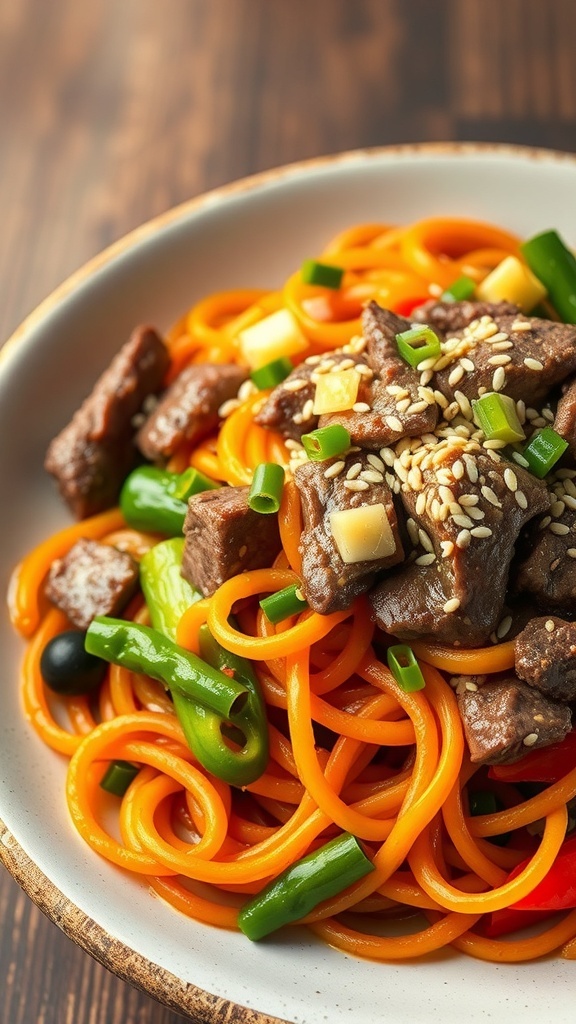
Japchae is a beloved Korean dish made with sweet potato noodles, also known as glass noodles. The noodles are stir-fried with a colorful mix of vegetables and often include beef or other proteins. The dish is known for its slightly sweet and savory flavor, making it a favorite at gatherings and celebrations.
The image shows a vibrant plate of Japchae, featuring glossy orange noodles intertwined with tender pieces of beef, fresh green onions, and sesame seeds sprinkled on top. The bright colors of the vegetables add to its appeal, making it not just delicious but also visually enticing.
To make Japchae, you’ll need sweet potato noodles, beef, carrots, bell peppers, spinach, and sesame oil. Start by soaking the noodles in hot water until they soften. Then, stir-fry the beef and vegetables in a pan, adding the noodles and a mix of soy sauce and sesame oil for flavor. Toss everything together until well combined.
This dish is perfect for any occasion and can be served warm or at room temperature. It’s a great way to enjoy a variety of textures and flavors in one bowl!
Korean Grilled Fish: Saengseon Gui

Saengseon Gui is a delightful dish that showcases the simplicity and freshness of grilled fish in Korean cuisine. The image captures beautifully grilled fish, perfectly charred with a golden-brown skin. The fish is garnished with fresh herbs and served alongside bright, juicy lemon slices, adding a refreshing touch.
This dish is not just about taste; it’s also about presentation. The vibrant colors of the fish and lemons make it visually appealing. The combination of flavors from the grilled fish and the citrusy lemon creates a mouthwatering experience.
To make Saengseon Gui at home, you’ll need a few simple ingredients: whole fish (like mackerel or sea bass), salt, pepper, and lemon. Start by cleaning the fish and seasoning it with salt and pepper. Grill it until the skin is crispy and the flesh is tender. Serve it with lemon slices for that extra zing!
Korean Spicy Chicken: Yangnyeom Chicken

Yangnyeom Chicken is a popular Korean dish that brings a burst of flavor to your table. The image shows beautifully glazed chicken pieces, coated in a shiny, spicy sauce. Each piece looks inviting, garnished with green onions and sesame seeds, making it a feast for the eyes.
This dish is known for its sweet and spicy kick, perfect for those who enjoy a bit of heat. The chicken is typically fried until crispy, then tossed in a sauce made from gochujang (Korean chili paste), soy sauce, garlic, and sugar. This combination creates a sticky, flavorful coating that’s hard to resist.
To make Yangnyeom Chicken at home, you’ll need ingredients like chicken wings or thighs, flour, and the sauce components. Start by marinating the chicken, then coat it in flour and fry until golden brown. After frying, toss the chicken in the sauce and serve it hot. It’s great as a snack or a main dish!
Korean Fruit Salad: Sangria Style

Korean fruit salad, or ‘sangria style,’ is a refreshing twist on traditional fruit salads. This vibrant dish combines a variety of fruits, creating a colorful and tasty treat. The image shows a beautiful bowl filled with fresh fruits like strawberries, blueberries, and mango, all mixed together in a lovely ceramic bowl.
The bright colors of the fruits make it visually appealing. Each bite offers a burst of sweetness and juiciness. This salad is perfect for warm days or as a light dessert. It’s easy to prepare and can be customized with your favorite fruits.
To make this salad, gather ingredients like strawberries, blueberries, mango, and kiwi. Chop them into bite-sized pieces and mix them in a bowl. For a fun twist, add a splash of fruit juice or a hint of mint for extra flavor. Serve it chilled for a delightful experience!
Korean Sweet and Spicy Chicken: Dakgangjeong

When you think of Korean food, Dakgangjeong might just pop into your mind. This dish features crispy chicken coated in a sweet and spicy sauce that’s simply irresistible. The image captures the essence of Dakgangjeong perfectly, showcasing juicy chicken pieces glistening with a vibrant red glaze.
The sauce is a delightful mix of gochujang (Korean chili paste), soy sauce, and honey, giving it that perfect balance of heat and sweetness. Topped with crunchy peanuts, it adds an extra layer of texture that makes every bite exciting.
Making Dakgangjeong at home is easier than you might think! Start with chicken drumsticks or wings, coat them in a light batter, and fry until golden brown. Then, toss them in the sauce and sprinkle with peanuts. Serve it up hot, and watch everyone dig in!
Sweet Red Bean Paste: Pat
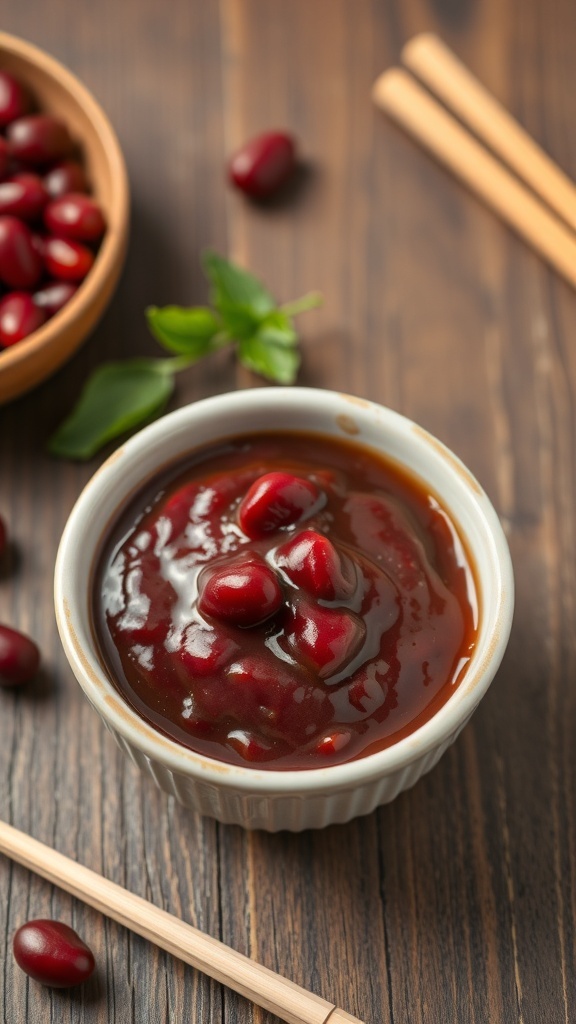
Sweet red bean paste, known as ‘pat’ in Korean, is a delicious staple in many Asian desserts. The image shows a bowl of this rich, glossy paste, topped with whole red beans. It’s often used in treats like rice cakes, pancakes, and even ice cream.
Making pat is quite simple. You’ll need adzuki beans, sugar, and a pinch of salt. Start by soaking the beans overnight, then boil them until soft. Drain and mash the beans, mixing in sugar and salt to taste. Cook the mixture until it thickens, and you’re done!
This sweet paste can be enjoyed in various ways. Spread it on toast, fill pastries, or serve it with mochi. It adds a unique flavor and sweetness that many people love. Try making it at home and enjoy a taste of Korean culture!
Korean Beef Soup: Yukgaejang

Yukgaejang is a hearty Korean beef soup that warms you up from the inside out. This dish is known for its rich flavors and spicy kick, making it a favorite during colder months. The image shows a steaming bowl of Yukgaejang, filled with tender beef, vibrant vegetables, and a sprinkle of fresh herbs.
The soup typically features ingredients like shredded beef, green onions, and various vegetables simmered in a spicy broth. It’s often served with a side of rice, which complements the soup perfectly. The bright red color of the broth hints at the bold flavors waiting to be tasted.
To make Yukgaejang, you’ll need beef brisket, garlic, gochugaru (Korean red pepper flakes), and soy sauce, among other ingredients. Start by boiling the beef until tender, then sauté the vegetables and add them to the pot with the broth. Let it simmer until everything is well combined. Serve hot, and enjoy!
Korean Spicy Fish Soup: Maeuntang

Maeuntang is a beloved Korean dish known for its spicy and savory flavors. This soup is often made with fresh fish and a variety of vegetables, creating a hearty meal that warms you up from the inside out.
The image shows a steaming bowl of maeuntang, filled with colorful ingredients. You can see chunks of fish, vibrant green onions, and bright orange pieces of radish. The rich, red broth hints at the spicy kick that awaits. This dish is not just about taste; it’s also a feast for the eyes!
To make maeuntang, you’ll need ingredients like fresh fish (such as cod or snapper), Korean chili paste, garlic, and assorted vegetables like zucchini and mushrooms. Start by sautéing garlic and chili paste, then add water and bring it to a boil. Toss in the fish and vegetables, letting everything simmer until cooked through. Serve hot for the best experience!
Korean Cucumber Salad: Oi Muchim

Korean Cucumber Salad, known as Oi Muchim, is a refreshing side dish that adds a burst of flavor to any meal. The image shows a vibrant bowl of sliced cucumbers, topped with red chili slices and sprinkled with sesame seeds. This salad is not only colorful but also simple to prepare, making it a favorite in many Korean households.
The main ingredients for Oi Muchim include fresh cucumbers, garlic, sesame oil, and a touch of vinegar. The cucumbers are sliced thinly to soak up all the flavors. A bit of chili adds a nice kick, while sesame seeds give it a crunchy texture. This salad is perfect for hot days or as a side to grilled meats.
To make Oi Muchim, start by slicing the cucumbers and placing them in a bowl. Add minced garlic, sesame oil, vinegar, and a pinch of salt. Toss everything together until the cucumbers are well coated. Let it sit for a few minutes to allow the flavors to meld. Serve it chilled for the best taste!
Kimchi Jjigae: Hearty Kimchi Stew

Kimchi Jjigae is a beloved Korean stew that warms the soul. This dish features a rich, spicy broth filled with tender chunks of kimchi, tofu, and often some meat, making it a hearty meal. The vibrant colors in the bowl showcase the delicious ingredients, inviting you to dig in.
In the image, you can see a steaming bowl of Kimchi Jjigae, topped with fresh green onions. The tofu cubes are perfectly cooked, soaking up the flavors of the broth. Alongside, there’s a bowl of rice, which is perfect for balancing the spice of the stew. A small dish of pickled vegetables adds a nice crunch and tang to the meal.
To make this dish, you’ll need ingredients like kimchi, tofu, pork (or beef), green onions, and gochugaru (Korean red pepper flakes). Start by sautéing the meat, then add kimchi and water to create the broth. Let it simmer before adding tofu and green onions. Serve hot with rice for a comforting meal.
Korean Rice Cake: Songpyeon

Songpyeon is a traditional Korean rice cake often enjoyed during the Chuseok holiday. These delightful treats are made from glutinous rice flour and are filled with sweet fillings like sesame seeds, red bean paste, or chestnuts. The image shows a beautiful plate of songpyeon, showcasing their soft, chewy texture and vibrant colors.
The round shape of songpyeon symbolizes the full moon, representing abundance and prosperity. Each piece is carefully shaped and often topped with a dollop of sweet red bean paste and a sprinkle of sesame seeds, making them not just tasty but visually appealing too.
Making songpyeon at home can be a fun experience. You’ll need glutinous rice flour, water, and your choice of filling. Start by mixing the flour with water to form a dough. Then, divide the dough into small balls, flatten them, and add your filling before sealing them up. Finally, steam the cakes until they are cooked through. Enjoy them warm or at room temperature!
Korean Sweet and Sour Pork: Tangsooyuk
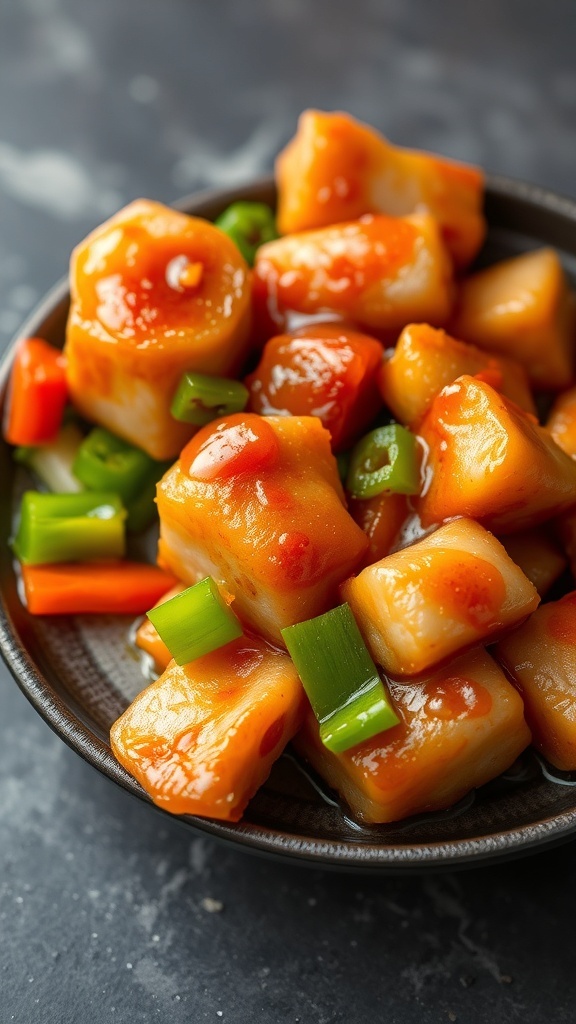
Tangsooyuk is a beloved Korean dish that perfectly balances sweet and sour flavors. The image shows delicious pieces of pork coated in a glossy sauce, garnished with vibrant green onions and colorful vegetables. This dish is not just a feast for the taste buds but also for the eyes.
To make Tangsooyuk, you’ll need ingredients like pork, cornstarch, and a mix of sweet and sour sauce. Start by cutting the pork into bite-sized pieces and marinating it. Then, coat the pork in cornstarch and fry until golden brown. For the sauce, combine vinegar, sugar, ketchup, and soy sauce, and stir until thickened. Toss the fried pork in the sauce along with your favorite veggies.
This dish is perfect for sharing and is often served at gatherings. It’s a great way to introduce friends and family to the flavors of Korean cuisine. Enjoy it with a side of rice for a complete meal!
Korean Spicy Grilled Pork: Samgyeopsal

Samgyeopsal is a popular Korean dish featuring thick slices of pork belly. The image shows beautifully grilled pork, perfectly caramelized with a smoky flavor. The pork is sliced into generous pieces, showcasing its juicy layers. Around the meat, you can see small bowls filled with dipping sauces, which add extra flavor to each bite.
This dish is often enjoyed with fresh vegetables and rice, making it a complete meal. Grilling at the table is a fun experience, allowing everyone to cook their own meat just the way they like it. The sizzling sound and mouthwatering aroma create a lively atmosphere.
To make samgyeopsal, you’ll need pork belly, sesame oil, salt, and pepper. Start by heating a grill or pan. Season the pork with salt and pepper, then grill until crispy and golden. Serve with dipping sauces like ssamjang or soy sauce for a delicious twist. Pair it with lettuce wraps for a fresh crunch!
Japchae: Savory Stir-Fried Noodles

Japchae is a beloved Korean dish that features stir-fried noodles, often made from sweet potato starch. The noodles have a unique chewy texture that pairs perfectly with a variety of colorful vegetables. In the image, you can see a vibrant plate of japchae, showcasing the beautiful mix of red bell peppers, zucchini, and tender mushrooms, all tossed together with the noodles.
This dish is not just about looks; it’s packed with flavor. The noodles are typically seasoned with soy sauce and sesame oil, giving them a rich, savory taste. The addition of sesame seeds and fresh cilantro on top adds a nice crunch and freshness.
Making japchae at home is quite simple. You’ll need ingredients like sweet potato noodles, assorted vegetables, soy sauce, sesame oil, and some protein if you like. Start by soaking the noodles in hot water until they soften. Meanwhile, stir-fry your veggies until they’re tender. Combine everything in a pan, add your seasonings, and toss well. Serve it warm or at room temperature for a delightful meal!
Spicy Kimchi Fried Rice

Spicy kimchi fried rice is a delightful dish that brings together bold flavors and comforting textures. The image shows a bowl filled with fluffy rice topped with vibrant red kimchi and a perfectly fried egg. Green onions sprinkle the top, adding a fresh touch.
This dish is not only tasty but also easy to make. You’ll need cooked rice, kimchi, a fried egg, and some green onions. Start by sautéing the kimchi in a pan, then add the rice and stir until everything is heated through. Top it off with a fried egg for that extra richness.
Kimchi adds a spicy kick, making every bite exciting. It’s a great way to use leftover rice and is perfect for a quick meal. Enjoy it for breakfast, lunch, or dinner!
Bulgogi Beef Tacos
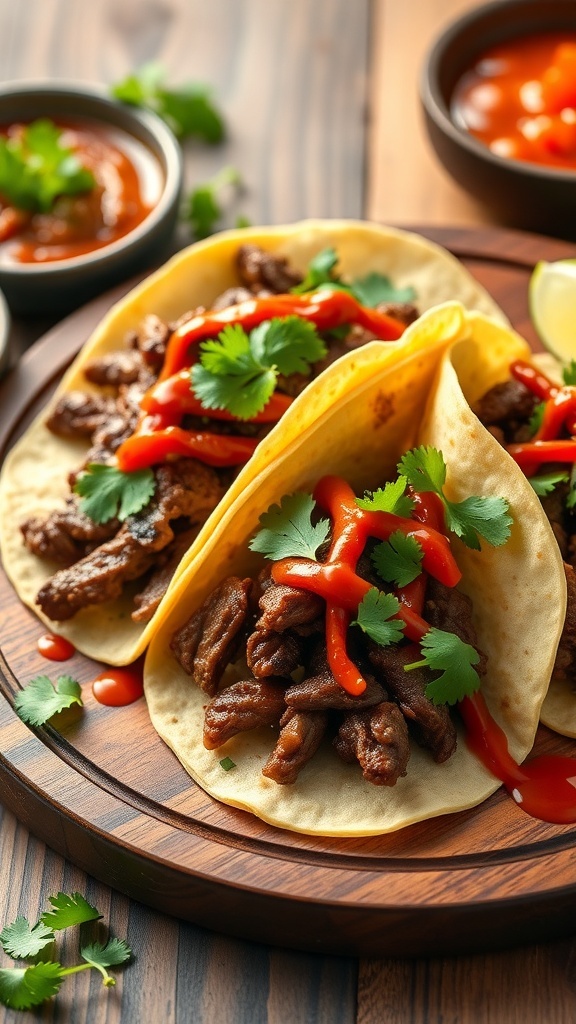
Bulgogi beef tacos bring a fun twist to traditional Korean flavors. The image shows two soft tortillas filled with tender, marinated beef, topped with fresh cilantro and a drizzle of spicy sauce. The vibrant colors make these tacos look irresistible!
To make these tasty tacos, you’ll need some key ingredients. Start with thinly sliced beef, soy sauce, sugar, garlic, and sesame oil for the marinade. Don’t forget the tortillas and your favorite toppings like cilantro and hot sauce.
Cooking is simple! Marinate the beef for at least 30 minutes, then stir-fry it until it’s cooked through. Warm the tortillas and fill them with the beef. Top with cilantro and a splash of sauce for extra flavor.
These bulgogi beef tacos are perfect for a quick meal or a fun gathering. They combine the best of Korean cuisine with the beloved taco format. Enjoy!