Asian dinner recipes are a fantastic way to bring bold flavors and diverse ingredients right to your kitchen. From savory stir-fries and aromatic curries to comforting soups and fresh noodle dishes, there’s something for everyone. These easy-to-follow recipes not only showcase the culinary richness of Asian cuisine but also offer a fun way to mix things up for your next dinner. Let’s get cooking!
Spicy Thai Basil Chicken
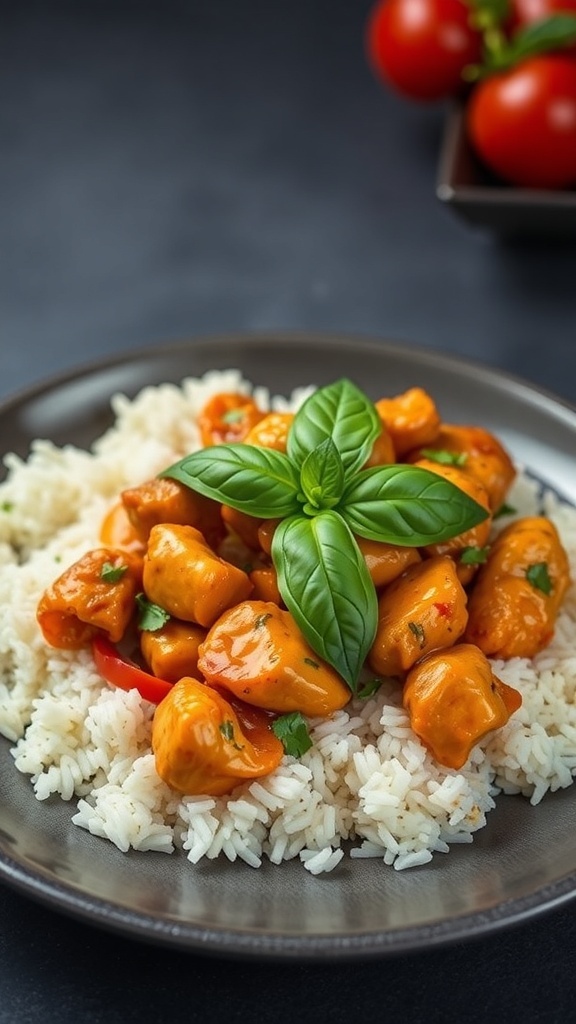
Spicy Thai Basil Chicken is a vibrant dish that brings a kick to your dinner table. The combination of tender chicken, fresh basil, and a spicy sauce creates a delightful meal. This dish is not only flavorful but also quick to prepare, making it perfect for busy weeknights.
The image showcases a beautifully plated serving of Spicy Thai Basil Chicken over a bed of fluffy rice. The bright colors of the chicken and the green basil leaves pop against the white rice, making it visually appealing. It’s garnished with fresh herbs, adding an extra touch of freshness.
To make this dish, you’ll need a few simple ingredients. Let’s get started!
Ingredients
- 1 lb chicken breast, diced
- 2 tablespoons vegetable oil
- 4 cloves garlic, minced
- 2-3 Thai bird chilies, chopped
- 2 tablespoons soy sauce
- 1 tablespoon oyster sauce
- 1 tablespoon fish sauce
- 1 cup fresh basil leaves
- 1 bell pepper, sliced
- Cooked jasmine rice, for serving
Instructions
- Heat the oil in a pan over medium heat. Add the minced garlic and chopped chilies. Sauté until fragrant.
- Add the diced chicken to the pan. Cook until the chicken is browned and cooked through.
- Stir in the soy sauce, oyster sauce, and fish sauce. Mix well to coat the chicken.
- Add the sliced bell pepper and cook for another 2-3 minutes until slightly tender.
- Remove from heat and stir in the fresh basil leaves until wilted.
- Serve hot over jasmine rice and enjoy!
Classic Japanese Ramen
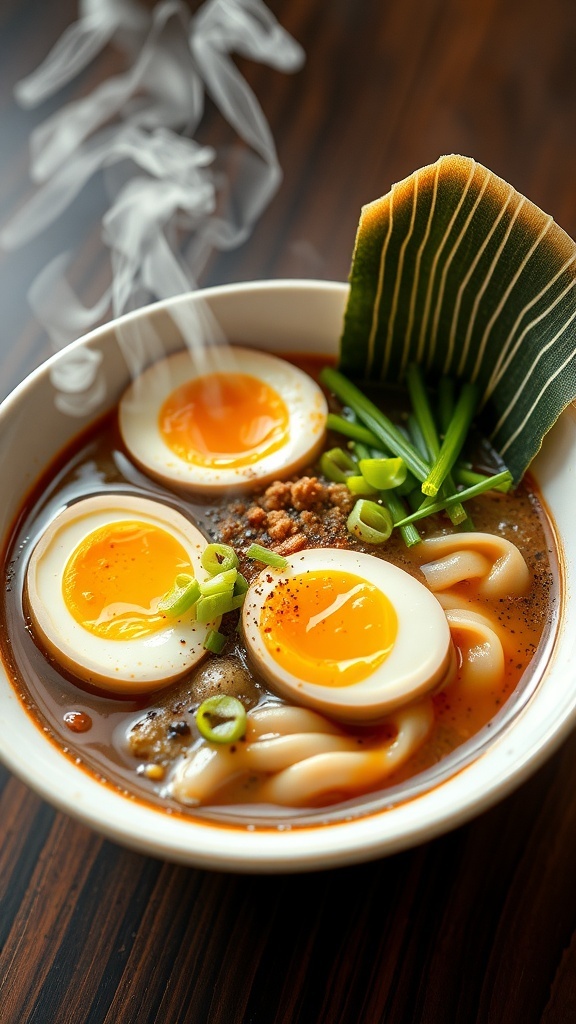
Ramen is a beloved dish that warms the soul. This classic Japanese noodle soup is rich in flavor and offers a delightful combination of textures. The image showcases a steaming bowl of ramen, featuring perfectly cooked eggs with golden yolks, tender noodles, and fresh green onions. The presentation is inviting, with a hint of aromatic steam rising from the bowl.
Making ramen at home can be a fun and rewarding experience. You can customize it to your taste, adding your favorite toppings and adjusting the broth’s richness. The key to a great ramen lies in the broth, which can be made from chicken, pork, or even a vegetarian base. Let’s dive into the recipe!
Ingredients
- 4 cups chicken broth
- 2 cups water
- 2 packs of ramen noodles
- 2 soft-boiled eggs
- 1 cup sliced green onions
- 1 tablespoon soy sauce
- 1 tablespoon miso paste
- 1 teaspoon sesame oil
- 1/2 cup cooked ground pork (optional)
- Nori sheets for garnish
Instructions
- Prepare the Broth: In a large pot, combine chicken broth and water. Bring to a simmer over medium heat.
- Add Flavor: Stir in soy sauce, miso paste, and sesame oil. Let it simmer for about 10 minutes to blend the flavors.
- Cook the Noodles: In a separate pot, cook the ramen noodles according to package instructions. Drain and set aside.
- Assemble the Bowl: Divide the cooked noodles into bowls. Pour the hot broth over the noodles.
- Add Toppings: Halve the soft-boiled eggs and place them on top. Add ground pork if using, and sprinkle with green onions. Garnish with nori sheets.
- Serve: Enjoy your homemade ramen hot!
Vegetarian Pad Thai
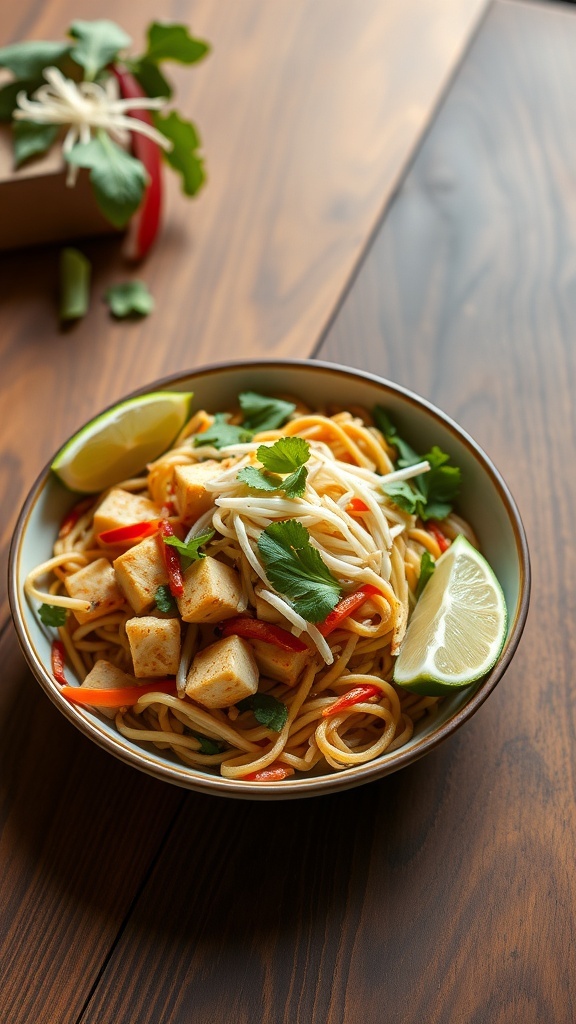
Vegetarian Pad Thai is a delightful twist on the classic dish. This version is packed with fresh vegetables and tofu, making it both healthy and satisfying. The vibrant colors in the image show off the mix of red bell peppers, fresh herbs, and noodles, all coming together in a beautiful bowl.
The dish is not only visually appealing but also bursting with flavors. The tangy lime and fresh cilantro add a refreshing touch, while the soft noodles provide a comforting base. It’s a perfect meal for any day of the week!
Ingredients
- 8 oz rice noodles
- 1 tablespoon vegetable oil
- 1 cup firm tofu, cubed
- 1 red bell pepper, sliced
- 2 green onions, chopped
- 2 cloves garlic, minced
- 1 tablespoon soy sauce
- 2 tablespoons peanut butter
- 1 tablespoon lime juice
- 1/4 cup bean sprouts
- Fresh cilantro for garnish
- Lime wedges for serving
Instructions
- Cook the Noodles: Boil water and cook the rice noodles according to package instructions. Drain and set aside.
- Sauté the Tofu: In a large skillet, heat the vegetable oil over medium heat. Add the cubed tofu and cook until golden brown, about 5 minutes. Remove and set aside.
- Stir-Fry the Veggies: In the same skillet, add the garlic and red bell pepper. Stir-fry for about 3 minutes until the pepper is tender.
- Add Noodles and Sauce: Return the tofu to the skillet. Add the cooked noodles, soy sauce, peanut butter, and lime juice. Toss everything together until well combined and heated through.
- Finish and Serve: Stir in the bean sprouts and green onions. Serve hot, garnished with fresh cilantro and lime wedges.
Miso Glazed Salmon
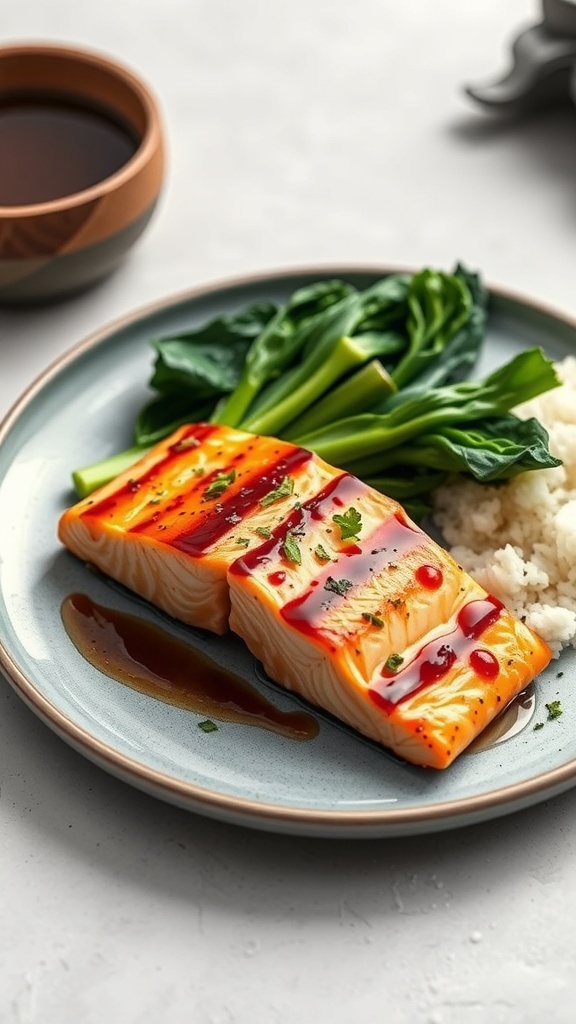
Miso glazed salmon is a delightful dish that brings a taste of Asia right to your dinner table. The salmon is beautifully glazed with a rich miso sauce, giving it a savory and slightly sweet flavor. This dish pairs perfectly with steamed rice and fresh greens, making it a balanced meal.
The vibrant colors of the salmon, the glossy glaze, and the fresh vegetables create an inviting plate. It’s not just about taste; it’s also about presentation. A well-plated dish can make any meal feel special.
To make this dish, you’ll need fresh salmon fillets, miso paste, soy sauce, honey, and a few other simple ingredients. The cooking process is straightforward, making it a great option for both weeknight dinners and special occasions.
Ingredients
- 2 salmon fillets
- 2 tablespoons miso paste
- 1 tablespoon soy sauce
- 1 tablespoon honey
- 1 teaspoon sesame oil
- 1 cup cooked rice
- 1 cup steamed bok choy or other greens
- Chopped green onions for garnish
Instructions
- Prepare the Marinade: In a small bowl, mix miso paste, soy sauce, honey, and sesame oil until smooth.
- Marinate the Salmon: Place the salmon fillets in a shallow dish and pour the marinade over them. Let it sit for at least 15 minutes.
- Cook the Salmon: Preheat your oven to 400°F (200°C). Place the marinated salmon on a baking sheet lined with parchment paper. Bake for 12-15 minutes or until the salmon is cooked through.
- Serve: Plate the salmon with cooked rice and steamed bok choy. Drizzle any remaining glaze over the top and garnish with chopped green onions.
Vietnamese Pho
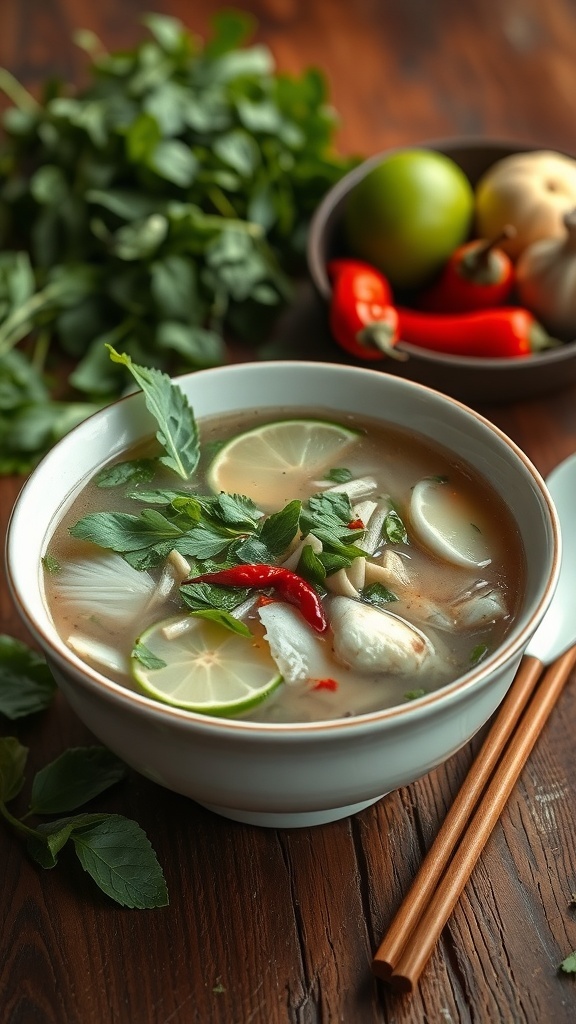
Vietnamese Pho is a beloved dish known for its rich flavors and comforting warmth. The image showcases a steaming bowl of pho, filled with aromatic broth, fresh herbs, and vibrant ingredients. You can see slices of lime, red chilies, and fragrant herbs like basil, which are essential for that fresh taste.
This dish is not just a meal; it’s a cultural experience. Pho is often enjoyed at any time of day, making it a versatile choice for breakfast, lunch, or dinner. The combination of savory broth and tender noodles makes it a favorite among many.
Let’s get to the heart of this delicious recipe!
Ingredients
- 1 lb beef bones
- 1 onion, halved
- 1 ginger, halved
- 8 cups water
- 2 star anise
- 1 cinnamon stick
- 1 tablespoon fish sauce
- 1 tablespoon salt
- 8 oz rice noodles
- 1 lb beef sirloin, thinly sliced
- Fresh herbs (basil, cilantro, mint)
- Lime wedges
- Red chilies, sliced
Instructions
- Prepare the Broth: In a large pot, char the onion and ginger over an open flame or in a hot skillet until slightly blackened. Add the beef bones to the pot with water, charred onion, ginger, star anise, cinnamon stick, fish sauce, and salt. Bring to a boil, then reduce heat and simmer for about 2-3 hours.
- Strain the Broth: Once the broth is ready, strain it to remove the solids. Return the clear broth to the pot and keep it warm.
- Cook the Noodles: In a separate pot, cook the rice noodles according to package instructions. Drain and set aside.
- Assemble the Pho: In bowls, place a portion of cooked noodles. Top with raw beef slices. Pour the hot broth over the noodles and beef to cook the meat.
- Garnish: Add fresh herbs, lime wedges, and sliced chilies on top. Serve hot and enjoy!
Savory Korean BBQ Beef
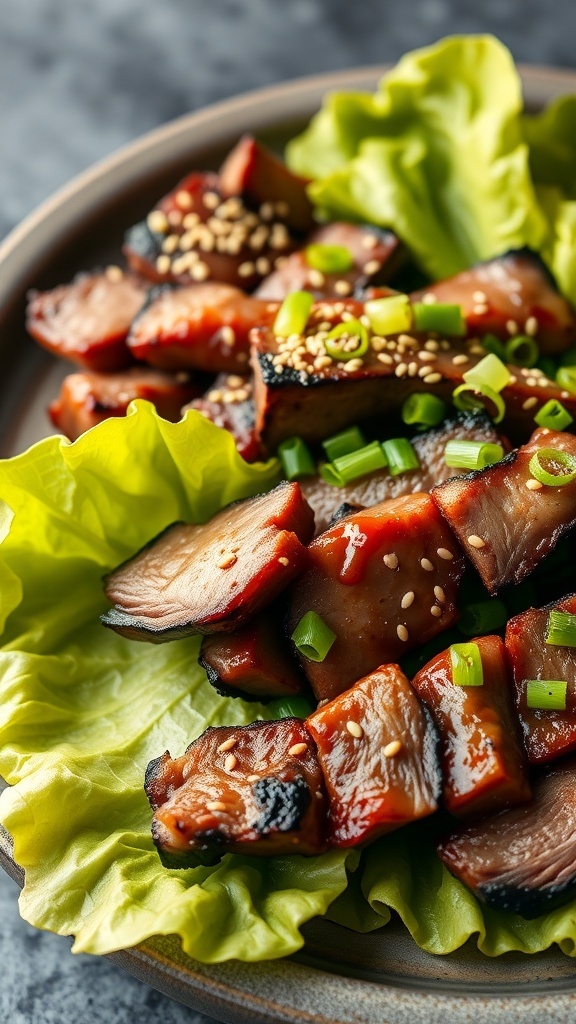
Korean BBQ beef is a delightful dish that brings a burst of flavors to your dinner table. The image showcases tender slices of marinated beef, perfectly grilled and served on a bed of fresh lettuce. Topped with sesame seeds and chopped green onions, it looks both appetizing and vibrant.
This dish is not just about the taste; it’s also about the experience. Wrapping the beef in lettuce leaves adds a refreshing crunch, making each bite satisfying. The combination of savory, sweet, and slightly smoky flavors makes it a favorite for many.
Making Korean BBQ beef at home is easier than you might think. With a few simple ingredients, you can create a meal that impresses family and friends alike. Let’s get into the recipe!
Crispy Peking Duck
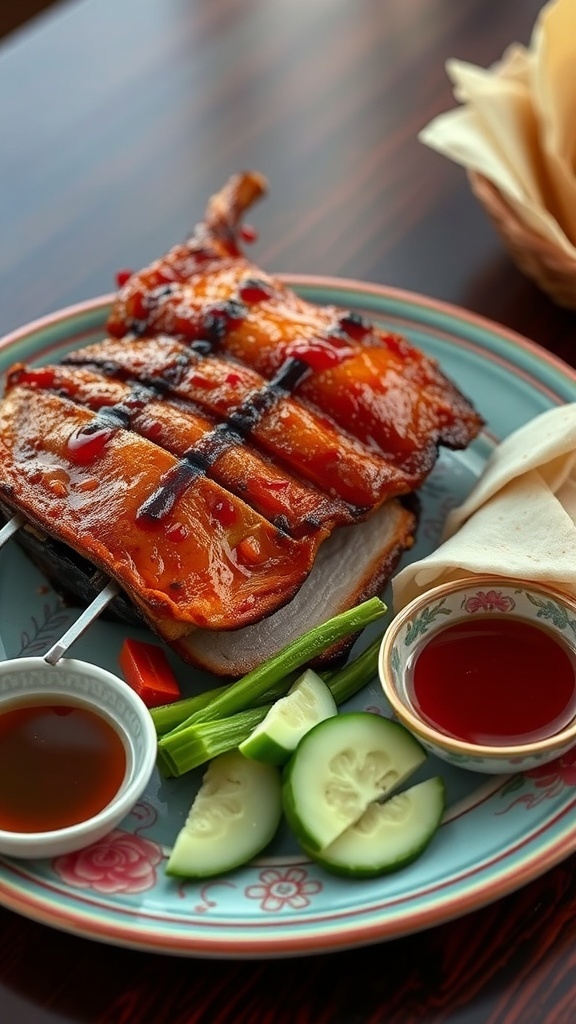
Crispy Peking Duck is a classic dish that brings a taste of China right to your table. The image shows beautifully roasted duck, its skin glistening and crispy, served with fresh vegetables and dipping sauces. The vibrant colors of the dish make it not only delicious but also visually appealing.
This dish is known for its rich flavor and unique preparation method. The duck is seasoned and air-dried before being roasted, which gives it that signature crispy skin. It’s often served with thin pancakes, hoisin sauce, and sliced vegetables like cucumbers and green onions. Each bite is a delightful combination of textures and tastes.
Making Peking Duck at home might seem challenging, but with the right ingredients and steps, you can create a memorable meal. Gather your friends and family for a fun dinner experience as you assemble your own wraps!
Ingredients
- 1 whole duck (about 5-6 lbs)
- 2 tablespoons soy sauce
- 2 tablespoons honey
- 1 tablespoon rice vinegar
- 1 teaspoon five-spice powder
- 1 teaspoon salt
- Thin pancakes or tortillas
- Cucumber, julienned
- Green onions, sliced
- Hoisin sauce
Instructions
- Prepare the Duck: Rinse the duck under cold water and pat dry. Mix soy sauce, honey, rice vinegar, five-spice powder, and salt in a bowl. Rub this mixture all over the duck, including the cavity. Let it marinate in the fridge for at least 4 hours, preferably overnight.
- Air-Dry the Duck: Hang the duck in a cool, dry place for about 4 hours to dry out the skin. This step is key for achieving crispy skin.
- Roast the Duck: Preheat your oven to 375°F (190°C). Place the duck on a rack in a roasting pan. Roast for about 1 hour, basting occasionally with the drippings. Increase the heat to 425°F (220°C) and roast for another 30 minutes until the skin is crispy and golden brown.
- Rest and Slice: Let the duck rest for 15 minutes before slicing. Serve with pancakes, hoisin sauce, and fresh vegetables.
- Enjoy: Assemble your wraps by placing slices of duck, cucumber, and green onions on a pancake. Drizzle with hoisin sauce and roll it up. Enjoy your homemade Crispy Peking Duck!
Sweet and Sour Pork
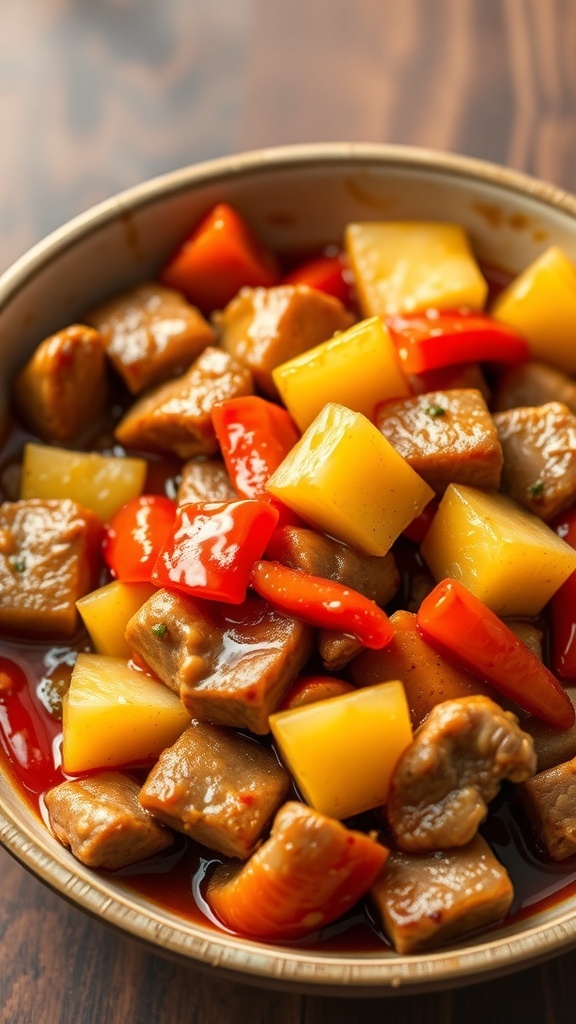
Sweet and sour pork is a classic dish that brings a delightful mix of flavors to your table. The vibrant colors of the bell peppers and pineapple chunks make this dish not only tasty but also visually appealing. The tender pieces of pork are coated in a glossy sauce that balances sweetness with a tangy kick.
This dish is perfect for family dinners or gatherings with friends. It pairs well with steamed rice, making it a satisfying meal. The combination of textures—from the crunchy vegetables to the soft pork—adds to the overall experience.
Ready to try making this delicious dish? Here’s a simple recipe to follow!
Ingredients
- 1 pound pork tenderloin, cut into bite-sized pieces
- 1 cup bell peppers, chopped (red and green)
- 1 cup pineapple chunks (fresh or canned)
- 1/2 cup onion, chopped
- 1/4 cup soy sauce
- 1/4 cup vinegar
- 1/4 cup ketchup
- 1/4 cup sugar
- 2 tablespoons cornstarch
- 1 tablespoon vegetable oil
- Salt and pepper to taste
Instructions
- Marinate the Pork: In a bowl, combine pork pieces with soy sauce, vinegar, and a pinch of salt. Let it marinate for about 30 minutes.
- Prepare the Sauce: In a separate bowl, mix ketchup, sugar, and cornstarch. Add a little water if needed to create a smooth sauce.
- Cook the Pork: Heat vegetable oil in a large skillet over medium-high heat. Add the marinated pork and cook until browned and cooked through, about 5-7 minutes.
- Add Vegetables: Stir in the bell peppers, onion, and pineapple. Cook for another 3-4 minutes until the vegetables are tender.
- Combine: Pour the sauce over the pork and vegetables. Stir well to coat everything evenly. Cook for an additional 2-3 minutes until the sauce thickens.
- Serve: Enjoy your sweet and sour pork over steamed rice!
Thai Red Curry Shrimp
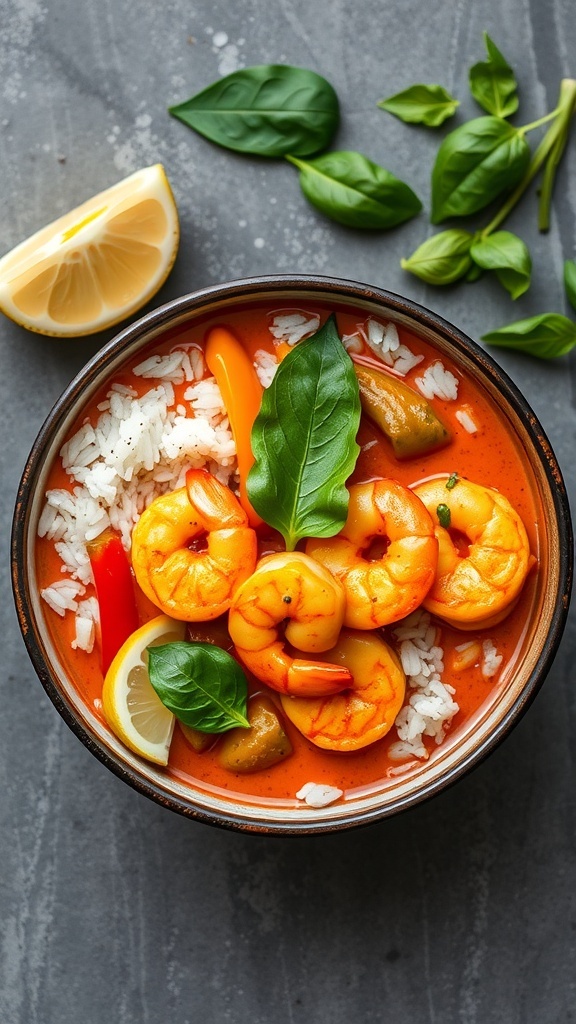
Thai Red Curry Shrimp is a delightful dish that brings together the rich flavors of Thai cuisine. This meal features succulent shrimp cooked in a creamy red curry sauce, paired perfectly with rice. The vibrant colors of the dish make it visually appealing, with bright red peppers and fresh basil adding a pop of freshness.
The combination of coconut milk and red curry paste creates a smooth and aromatic sauce that envelops the shrimp beautifully. It’s a quick and easy recipe, perfect for weeknight dinners or impressing guests.
Ingredients
- 1 lb shrimp, peeled and deveined
- 1 tablespoon vegetable oil
- 1 onion, sliced
- 1 bell pepper, sliced
- 2 tablespoons red curry paste
- 1 can (13.5 oz) coconut milk
- 1 tablespoon fish sauce
- 1 tablespoon brown sugar
- Fresh basil leaves for garnish
- Cooked rice for serving
Instructions
- Heat the oil in a large pan over medium heat. Add the onion and bell pepper, cooking until softened.
- Stir in the red curry paste and cook for another minute until fragrant.
- Add the coconut milk, fish sauce, and brown sugar. Stir well to combine.
- Bring the mixture to a simmer, then add the shrimp. Cook until the shrimp are pink and cooked through, about 5 minutes.
- Serve the curry over cooked rice and garnish with fresh basil leaves.
Malaysian Nasi Lemak
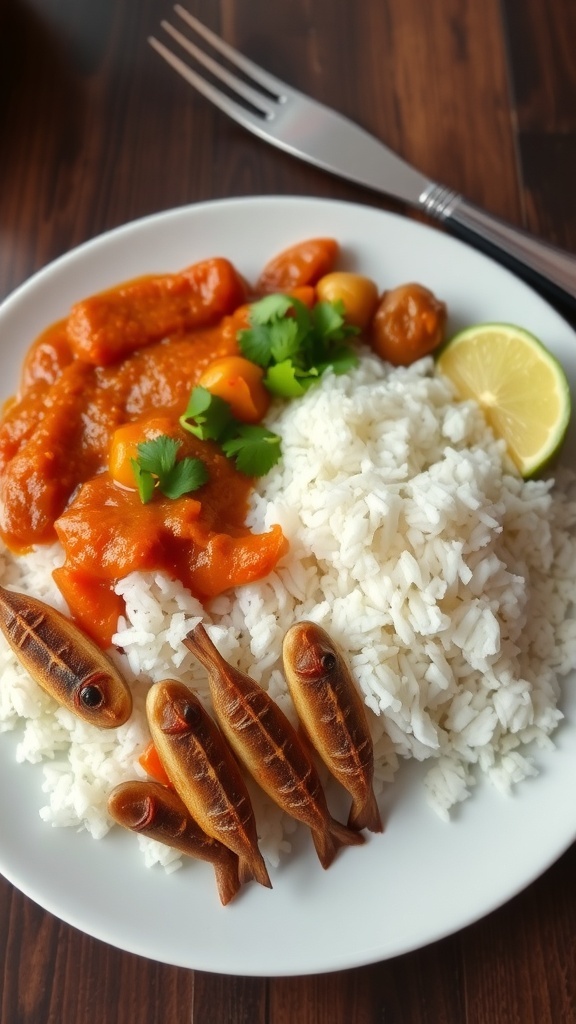
Nasi Lemak is a beloved dish in Malaysia, often enjoyed for breakfast but perfect at any time of day. The image shows a plate of fluffy white rice paired with a spicy sambal sauce and crispy fried fish. This combination is a classic representation of Nasi Lemak, showcasing its simplicity and deliciousness.
The rice is typically cooked in coconut milk, giving it a creamy texture and rich flavor. The sambal adds a kick, while the fish provides a satisfying crunch. Together, they create a delightful balance of flavors that many people adore.
To make Nasi Lemak at home, gather your ingredients and follow these steps:
Ingredients
- 2 cups jasmine rice
- 1 cup coconut milk
- 1 1/2 cups water
- 1 teaspoon salt
- 1 tablespoon pandan leaves (optional)
- 1/2 cup sambal (spicy chili paste)
- 8 small fried fish (or anchovies)
- 1 cucumber, sliced
- Hard-boiled eggs (optional)
Instructions
- Rinse the jasmine rice under cold water until the water runs clear. This helps remove excess starch.
- In a pot, combine the rinsed rice, coconut milk, water, salt, and pandan leaves if using. Bring to a boil.
- Once boiling, reduce the heat to low, cover, and let it simmer for about 20 minutes or until the rice is cooked and fluffy.
- While the rice is cooking, prepare the sambal and fry the fish until crispy.
- Once the rice is done, fluff it with a fork and serve it on a plate with sambal, fried fish, cucumber slices, and hard-boiled eggs if desired.
Japanese Chicken Katsu
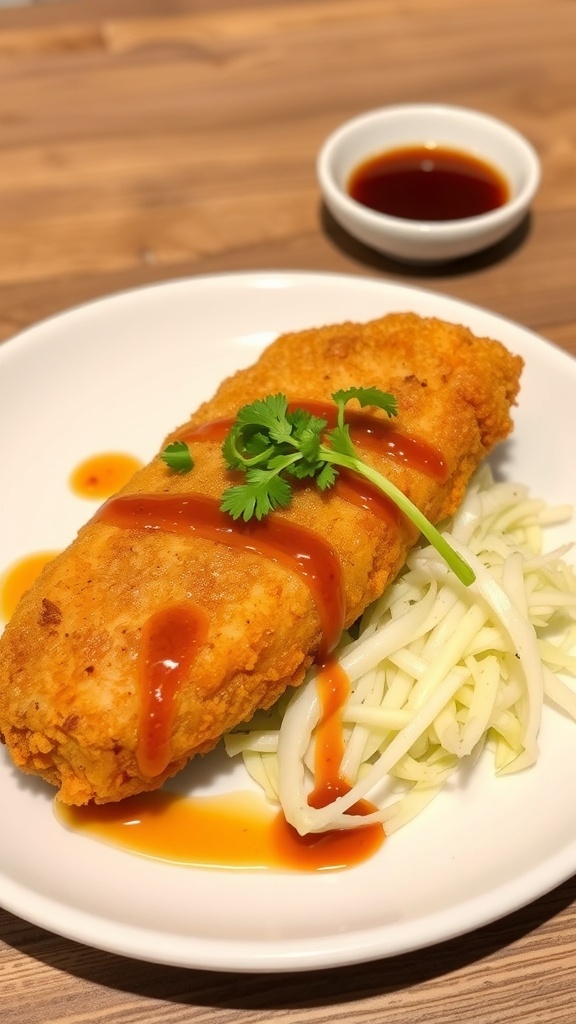
Chicken Katsu is a popular Japanese dish that features a crispy, golden-brown chicken cutlet. It’s typically served with shredded cabbage and a savory sauce that adds a delightful kick. The chicken is breaded with panko, which gives it that signature crunch. This dish is not just tasty; it’s also visually appealing, making it a great choice for dinner.
The image shows a beautifully plated Chicken Katsu, garnished with fresh cilantro and drizzled with sauce. The contrast of the crispy chicken against the fresh cabbage creates a mouthwatering presentation. This dish is perfect for a cozy dinner or a special occasion.
Ingredients
- 2 boneless, skinless chicken breasts
- 1 cup panko breadcrumbs
- 1/2 cup all-purpose flour
- 2 large eggs
- Salt and pepper to taste
- Vegetable oil for frying
- Shredded cabbage for serving
- Tonakatsu sauce for drizzling
Instructions
- Prepare the Chicken: Place the chicken breasts between two sheets of plastic wrap. Pound them to about 1/2 inch thick for even cooking.
- Season: Sprinkle salt and pepper on both sides of the chicken.
- Set Up Breading Station: In one bowl, place the flour. In another, beat the eggs. In a third bowl, add the panko breadcrumbs.
- Bread the Chicken: Dredge each chicken breast in flour, dip in the beaten eggs, and then coat with panko breadcrumbs, pressing gently to adhere.
- Fry: Heat vegetable oil in a large skillet over medium heat. Fry the chicken for about 4-5 minutes on each side, or until golden brown and cooked through. Drain on paper towels.
- Serve: Slice the chicken and serve it on a plate with shredded cabbage. Drizzle with tonkatsu sauce for extra flavor.
Chinese Egg Fried Rice
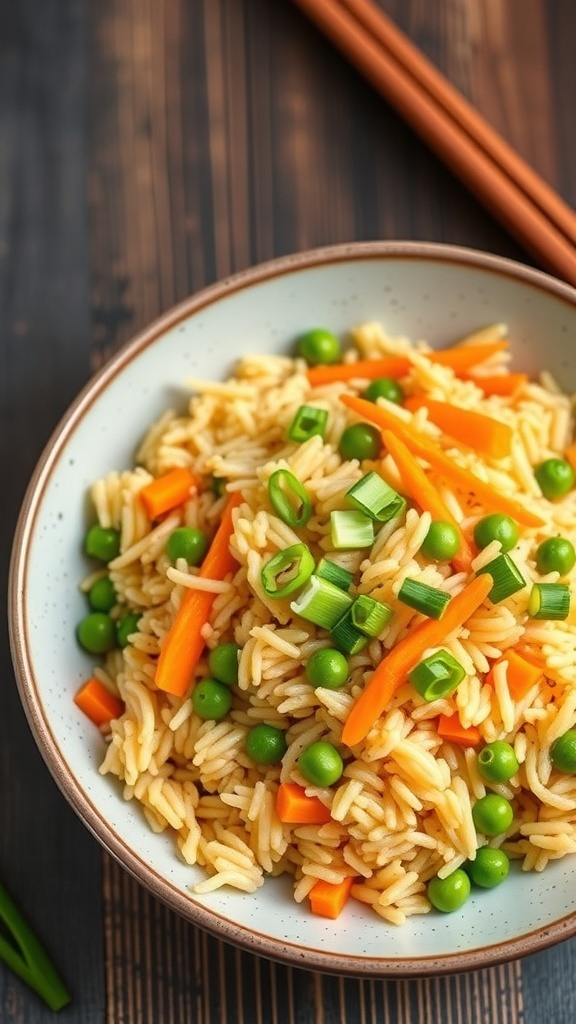
Chinese Egg Fried Rice is a classic dish that brings comfort and flavor to any meal. The image shows a vibrant bowl of fried rice, filled with fluffy grains, bright orange carrots, and fresh green peas. This dish is not just a side; it can be a satisfying main course too.
Making fried rice is simple and quick. You can use leftover rice, which is perfect for this recipe. The key is to stir-fry everything at high heat, allowing the rice to get a nice texture. The colorful vegetables add a pop of freshness, making it visually appealing.
Eggs are a must in this dish, providing richness and protein. You can customize it by adding your favorite proteins or veggies. It’s a great way to use up what you have in the fridge!
Ingredients
- 2 cups cooked rice (preferably day-old)
- 2 large eggs
- 1 cup mixed vegetables (peas and carrots)
- 3 green onions, chopped
- 2 tablespoons soy sauce
- 1 tablespoon sesame oil
- Salt and pepper to taste
- Oil for frying
Instructions
- Heat a large pan or wok over medium-high heat and add a little oil.
- Beat the eggs in a bowl and pour them into the pan. Scramble until fully cooked, then remove and set aside.
- In the same pan, add more oil if needed and toss in the mixed vegetables. Stir-fry for about 2-3 minutes.
- Add the cooked rice to the pan, breaking up any clumps. Stir-fry for another 3-4 minutes until heated through.
- Return the scrambled eggs to the pan. Add soy sauce, sesame oil, and green onions. Mix everything well and season with salt and pepper.
- Serve hot and enjoy your delicious Chinese Egg Fried Rice!
Indonesian Nasi Goreng
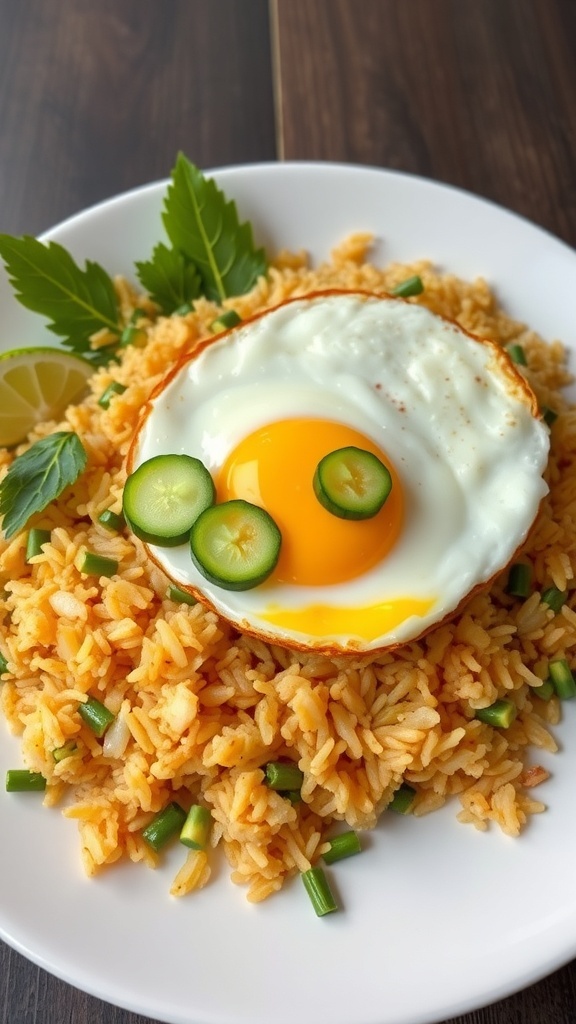
Nasi Goreng is a beloved dish in Indonesia, known for its vibrant flavors and comforting nature. This fried rice dish often features a beautiful presentation, as seen in the image. The rice is typically stir-fried with a mix of spices, vegetables, and sometimes meat, giving it a rich, savory taste.
The dish is often topped with a fried egg, which adds a creamy texture when you break the yolk. Fresh herbs and sliced chilies, like those shown in the image, provide a pop of color and a hint of freshness. Nasi Goreng is not just a meal; it’s a staple that brings people together, making it perfect for any gathering.
Making Nasi Goreng at home is simple and rewarding. You can customize it with your favorite ingredients, making it a versatile dish for any palate. Let’s get started with the recipe!
Ingredients
- 2 cups cooked rice (preferably day-old)
- 2 tablespoons vegetable oil
- 2 cloves garlic, minced
- 1 small onion, chopped
- 1 carrot, diced
- 1/2 cup green peas
- 2 tablespoons soy sauce
- 1 tablespoon sweet soy sauce (kecap manis)
- Salt and pepper to taste
- 2 eggs
- Sliced cucumbers and green onions for garnish
- Fresh herbs (like cilantro or basil) for garnish
Instructions
- Heat the vegetable oil in a large skillet or wok over medium heat.
- Add the minced garlic and chopped onion, sautéing until fragrant.
- Stir in the diced carrot and green peas, cooking for a few minutes until tender.
- Add the cooked rice to the skillet, breaking up any clumps. Stir well to combine with the vegetables.
- Pour in the soy sauce and sweet soy sauce, mixing everything together. Season with salt and pepper to taste.
- In a separate pan, fry the eggs sunny-side up.
- Serve the fried rice on plates, topped with a fried egg, and garnish with sliced cucumbers, green onions, and fresh herbs.
Sichuan Mapo Tofu
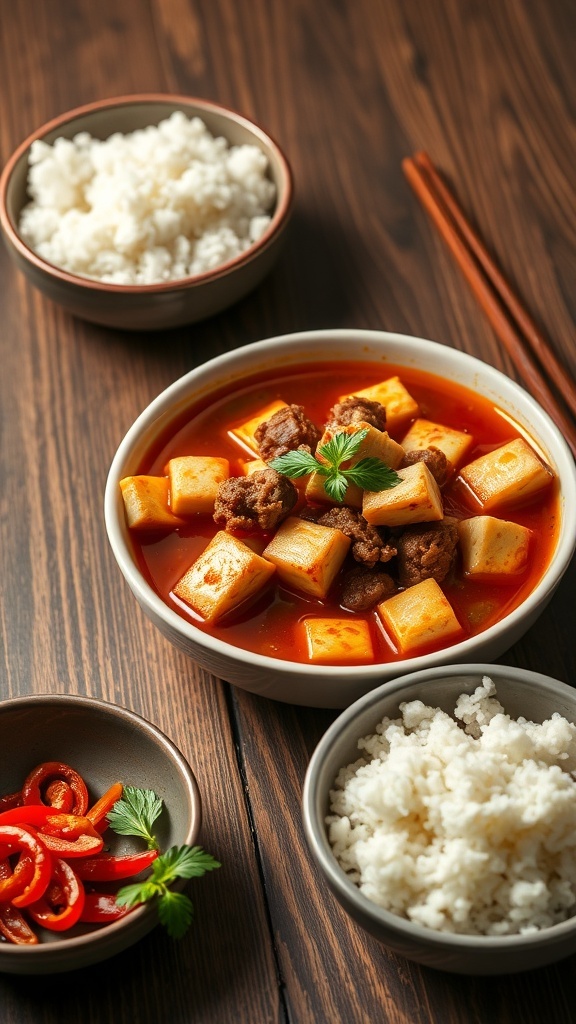
Sichuan Mapo Tofu is a classic dish known for its bold flavors and spicy kick. This dish features soft tofu cooked in a spicy sauce made with chili bean paste, garlic, and ground meat, usually pork or beef. The vibrant red sauce is not just visually appealing but also packs a punch that many love.
The image shows a bowl of Mapo Tofu, beautifully presented with chunks of tofu and minced meat swimming in a rich, red sauce. It’s garnished with fresh herbs, adding a pop of color. On the side, fluffy white rice complements the dish perfectly, balancing the heat and enhancing the overall meal experience. The small bowl of sliced red chilies hints at the spice level, inviting those who enjoy a little extra heat.
This dish is a staple in Sichuan cuisine and is often enjoyed with steamed rice. It’s perfect for a cozy dinner or a gathering with friends. Making Mapo Tofu at home is easier than you might think, and it’s sure to impress!
Filipino Adobo Chicken
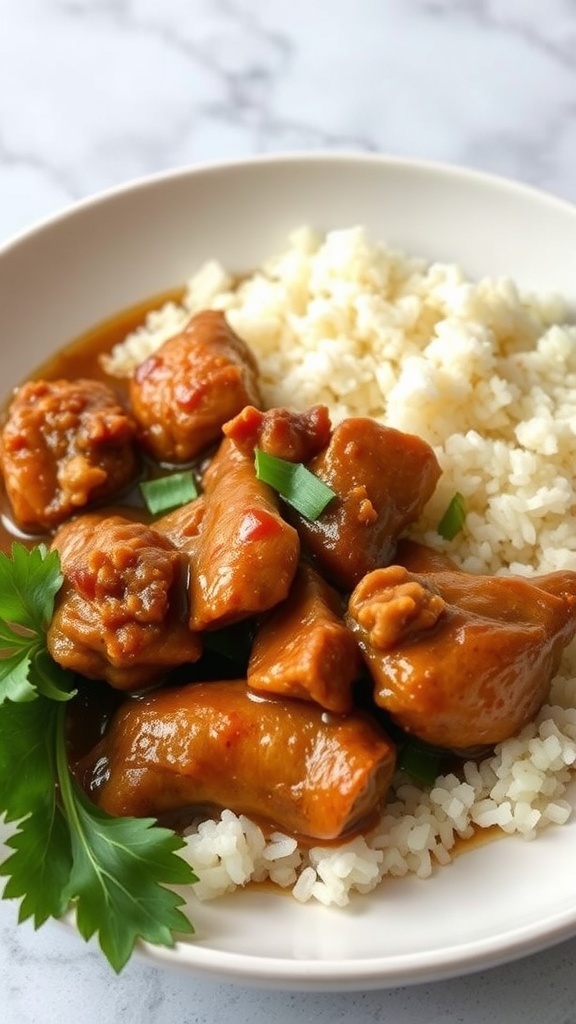
Filipino Adobo Chicken is a classic dish that showcases the rich flavors of Filipino cuisine. The image captures tender chicken pieces coated in a savory sauce, served over a bed of fluffy white rice. This dish is not just a meal; it’s a comforting experience that brings families together.
The key to a great adobo lies in its marinade. Soy sauce, vinegar, garlic, and bay leaves come together to create a tangy and aromatic flavor profile. The chicken absorbs these flavors, making each bite deliciously satisfying. Pair it with rice, and you have a perfect balance of taste and texture.
Making adobo is simple and rewarding. It’s a dish that can be enjoyed any day of the week, whether for a family dinner or a casual gathering with friends. Let’s get cooking!
Ingredients
- 2 lbs chicken thighs, bone-in and skin-on
- 1/2 cup soy sauce
- 1/2 cup white vinegar
- 1/2 cup water
- 1 onion, sliced
- 4 cloves garlic, minced
- 2-3 bay leaves
- 1 teaspoon black peppercorns
- 2 tablespoons vegetable oil
- Salt and pepper to taste
Instructions
- Marinate the Chicken: In a bowl, combine soy sauce, vinegar, garlic, bay leaves, and peppercorns. Add the chicken and marinate for at least 30 minutes, or overnight for more flavor.
- Brown the Chicken: Heat vegetable oil in a large pot over medium heat. Remove the chicken from the marinade and brown it on all sides, about 5-7 minutes.
- Add the Marinade: Pour in the marinade and water. Add sliced onions. Bring to a boil, then reduce heat to low and cover.
- Simmer: Let it simmer for about 30-40 minutes, or until the chicken is tender. Stir occasionally and adjust seasoning with salt and pepper.
- Serve: Once done, serve the adobo hot over rice, garnished with fresh herbs if desired.
Korean Kimchi Stew
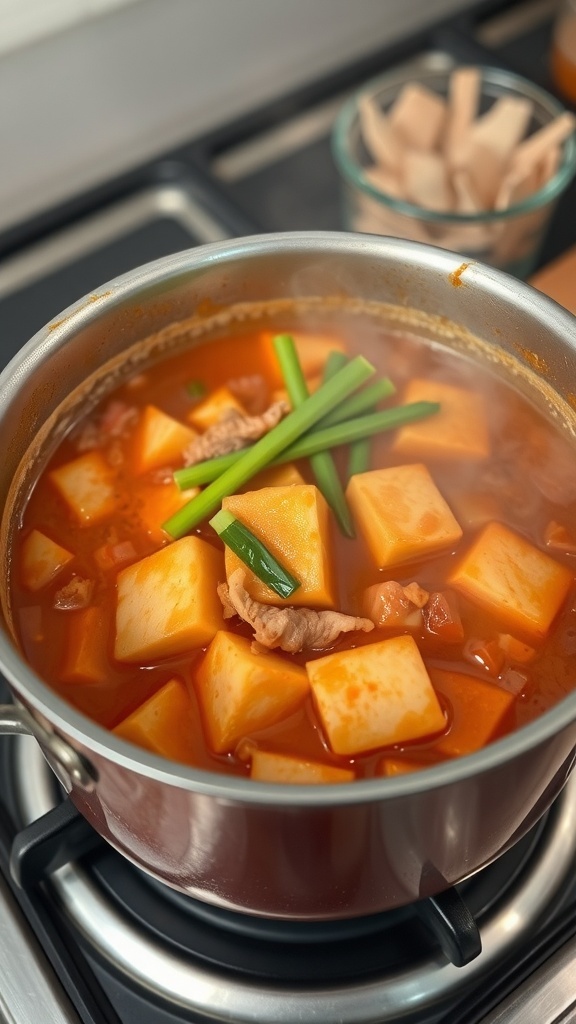
Korean Kimchi Stew, or Kimchi Jjigae, is a beloved dish that warms the heart and satisfies the soul. The image shows a pot bubbling with a vibrant red broth, filled with chunks of tofu, tender meat, and fresh green onions. This stew is a staple in Korean households, often enjoyed with a bowl of rice.
The key ingredient here is, of course, kimchi. This fermented cabbage adds a tangy flavor that defines the dish. The stew is not only delicious but also packed with nutrients, making it a great option for any meal. You can adjust the spice level to suit your taste, whether you like it mild or fiery hot.
Making Kimchi Stew is straightforward and rewarding. Gather your ingredients, and let’s get cooking!
Ingredients
- 1 cup kimchi, chopped
- 1/2 pound pork belly or beef, sliced
- 1 block of firm tofu, cubed
- 2 cups water or broth
- 2 tablespoons gochugaru (Korean red pepper flakes)
- 1 tablespoon soy sauce
- 1 teaspoon sesame oil
- 2 green onions, chopped
- 1 clove garlic, minced
- Salt to taste
Instructions
- In a pot, heat the sesame oil over medium heat. Add the pork belly or beef and sauté until browned.
- Add the chopped kimchi and garlic, cooking for another 2-3 minutes until fragrant.
- Pour in the water or broth, and bring to a boil. Stir in the gochugaru and soy sauce.
- Reduce heat and let it simmer for about 10 minutes. Add the tofu cubes and continue to simmer for another 5 minutes.
- Finally, stir in the chopped green onions and season with salt to taste. Serve hot with rice.
Cantonese Steamed Fish
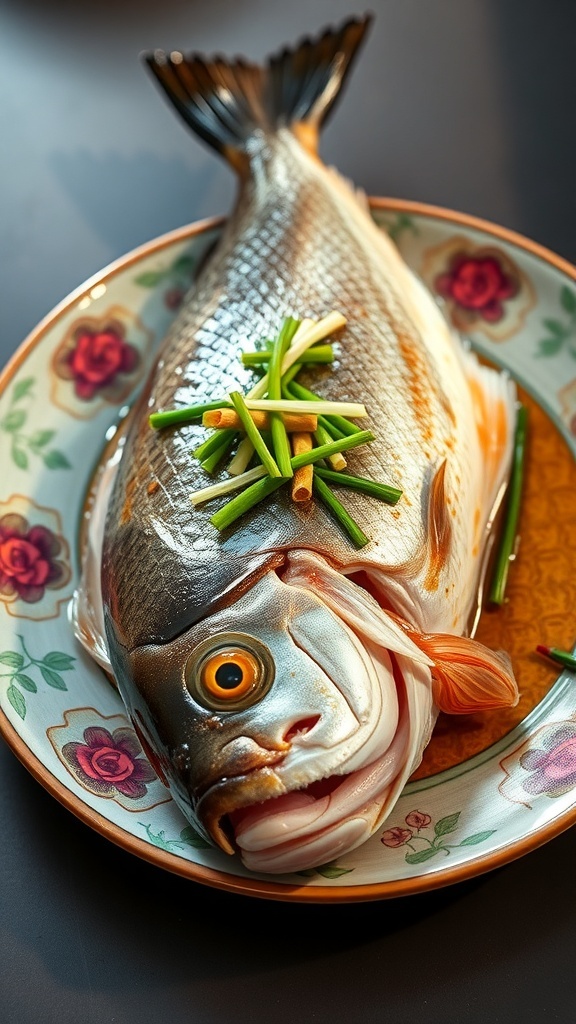
Cantonese steamed fish is a classic dish that highlights the freshness of the fish while keeping the flavors simple and clean. The image shows a beautifully presented whole fish, garnished with green onions and star-shaped decorations, resting in a rich, savory sauce. This dish is often served during special occasions, symbolizing abundance and prosperity.
Steaming the fish preserves its natural flavors and moisture, making it tender and juicy. The sauce, usually made with soy sauce, ginger, and sesame oil, adds a delightful umami kick. Pair it with steamed rice for a complete meal.
Here’s how to make this delicious dish at home:
Ingredients
- 1 whole fish (about 1-2 pounds, such as snapper or sea bass)
- 2 tablespoons soy sauce
- 1 tablespoon sesame oil
- 2-3 slices of ginger
- 2-3 green onions, chopped
- 1 tablespoon rice wine (optional)
- Salt and pepper to taste
Instructions
- Prepare the Fish: Clean the fish and make a few diagonal cuts on both sides. Season with salt and pepper, and place ginger slices inside the cavity.
- Set Up the Steamer: Fill a pot with water and bring it to a boil. Place a steaming rack inside the pot.
- Steam the Fish: Place the fish on a heatproof plate and drizzle with soy sauce and sesame oil. Put the plate on the steaming rack, cover, and steam for about 10-15 minutes, depending on the size of the fish.
- Finish with Garnish: Once cooked, carefully remove the plate from the steamer. Sprinkle chopped green onions on top and drizzle with additional soy sauce if desired.
- Serve: Enjoy the steamed fish hot with steamed rice and your favorite sides.
Spicy Sichuan Noodles
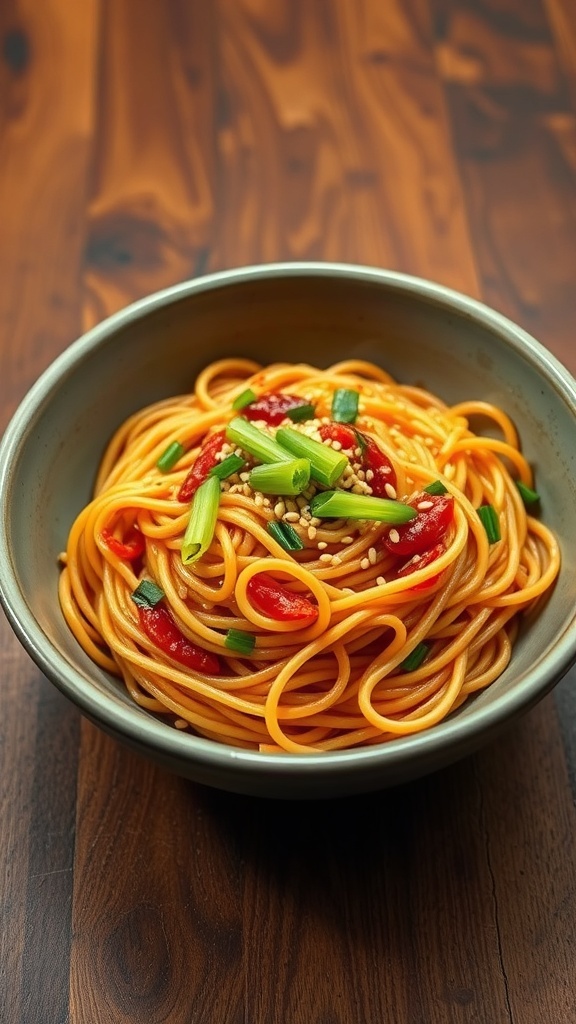
Spicy Sichuan noodles are a delightful dish that packs a punch. The noodles are coated in a rich, spicy sauce that brings together the flavors of garlic, ginger, and chili oil. Topped with fresh green onions and sesame seeds, this dish is both visually appealing and delicious.
The vibrant colors of the red chili sauce and green onions make this meal not just tasty but also a feast for the eyes. The texture of the noodles, combined with the crunch of the toppings, creates a satisfying eating experience. Perfect for a cozy dinner or a quick meal, these noodles are sure to impress.
Ingredients
- 8 oz noodles (preferably wheat noodles)
- 2 tablespoons vegetable oil
- 2 cloves garlic, minced
- 1 tablespoon ginger, minced
- 2 tablespoons soy sauce
- 2 tablespoons chili oil
- 1 tablespoon rice vinegar
- 1 tablespoon sesame oil
- 1 teaspoon sugar
- 2 green onions, chopped
- 1 tablespoon sesame seeds
Instructions
- Cook the Noodles: Boil water in a pot. Add the noodles and cook according to package instructions. Drain and set aside.
- Make the Sauce: In a pan, heat vegetable oil over medium heat. Add minced garlic and ginger, sautéing until fragrant.
- Add the Sauce Ingredients: Stir in soy sauce, chili oil, rice vinegar, sesame oil, and sugar. Mix well and let it simmer for a couple of minutes.
- Toss the Noodles: Add the cooked noodles to the sauce, tossing to coat evenly.
- Serve: Plate the noodles and top with chopped green onions and sesame seeds before serving.
Larb Gai (Thai Chicken Salad)
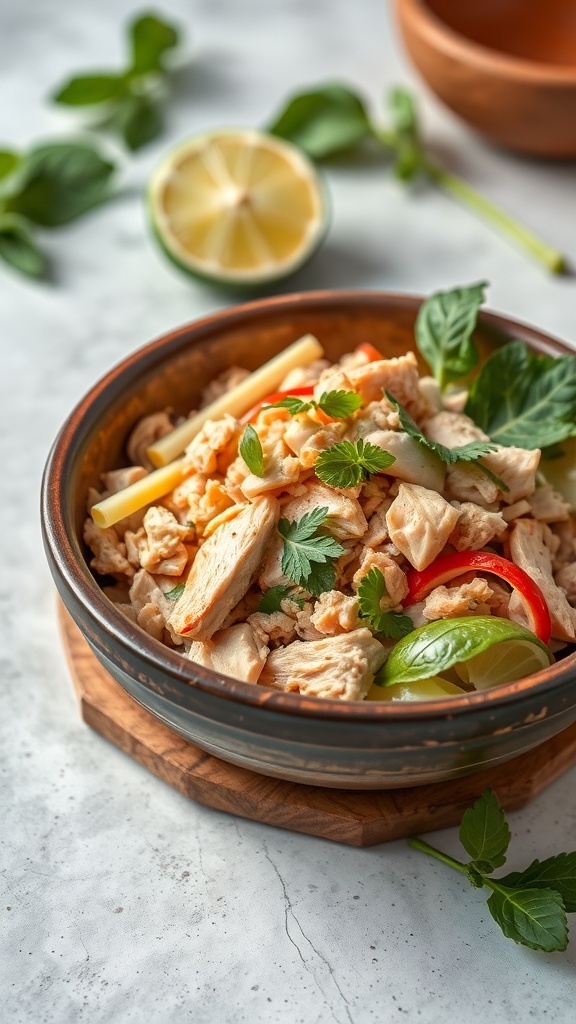
Larb Gai is a vibrant Thai chicken salad that brings a burst of flavors to your dinner table. This dish is not just a salad; it’s a delightful mix of textures and tastes. The combination of minced chicken, fresh herbs, and zesty lime creates a refreshing experience.
In the image, you can see a beautifully presented bowl of Larb Gai. The chicken is finely chopped and mixed with colorful ingredients like red chili and fresh herbs. The bright green lime adds a pop of color and hints at the tangy flavor that awaits. This dish is perfect for a light meal or as a side dish at a gathering.
Making Larb Gai at home is easy and fun. It’s a great way to enjoy a healthy meal packed with protein and fresh ingredients. Let’s get into the details of how to whip up this delicious salad!
Ingredients
- 1 lb ground chicken
- 1/4 cup lime juice
- 2 tablespoons fish sauce
- 1 tablespoon sugar
- 1/2 cup chopped fresh mint
- 1/2 cup chopped cilantro
- 1/4 cup sliced red chili (adjust to taste)
- 1/4 cup toasted rice powder
- 1 small red onion, thinly sliced
- 1 head of lettuce or cabbage leaves for serving
Instructions
- Cook the Chicken: In a skillet over medium heat, cook the ground chicken until fully cooked, about 5-7 minutes. Stir occasionally to break it up.
- Mix the Dressing: In a bowl, combine lime juice, fish sauce, and sugar. Stir until the sugar dissolves.
- Combine Ingredients: In a large bowl, mix the cooked chicken, fresh herbs, sliced red chili, and red onion. Pour the dressing over the mixture and toss well.
- Add Rice Powder: Gently fold in the toasted rice powder for added texture and flavor.
- Serve: Spoon the Larb Gai into lettuce or cabbage leaves and enjoy!
Japanese Beef Sukiyaki
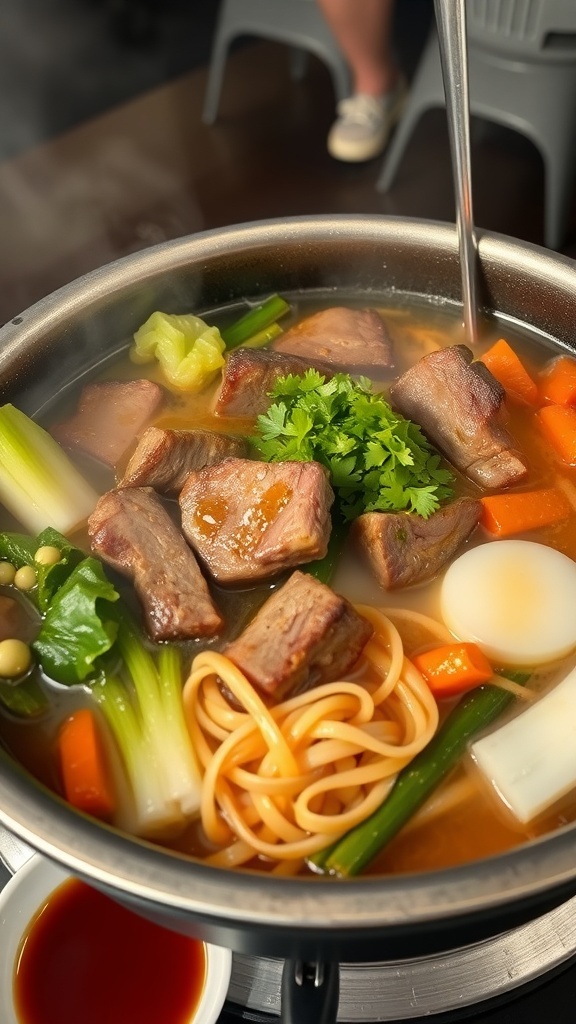
Japanese Beef Sukiyaki is a warm and comforting dish that brings a delightful mix of flavors to your table. This one-pot meal features tender beef, fresh vegetables, and noodles simmered in a savory broth. The vibrant colors of the ingredients make it visually appealing, and the aroma is simply irresistible.
In the image, you can see a bubbling pot filled with juicy pieces of beef, colorful carrots, leafy greens, and noodles. The broth is rich and inviting, perfect for a cozy dinner. Sukiyaki is often enjoyed with family and friends, making it a great choice for gatherings.
Let’s get started on making this delicious dish!
Ingredients
- 1 lb beef (thinly sliced)
- 4 cups dashi broth (or beef broth)
- 1/4 cup soy sauce
- 1/4 cup mirin
- 2 tablespoons sugar
- 1 onion (sliced)
- 2 cups napa cabbage (cut into pieces)
- 1 cup shiitake mushrooms (sliced)
- 1 cup carrots (sliced)
- 1 package udon noodles
- 2 green onions (chopped)
- Fresh cilantro for garnish
Instructions
- Prepare the Broth: In a large pot, combine dashi broth, soy sauce, mirin, and sugar. Bring to a simmer over medium heat.
- Add the Beef: Once the broth is simmering, add the sliced beef. Cook for about 2-3 minutes until it starts to brown.
- Add Vegetables: Stir in the onion, napa cabbage, shiitake mushrooms, and carrots. Let everything simmer for about 5-7 minutes until the vegetables are tender.
- Cook the Noodles: In a separate pot, cook the udon noodles according to package instructions. Drain and set aside.
- Combine: Add the cooked noodles to the pot with the broth and vegetables. Stir gently to combine.
- Serve: Ladle the Sukiyaki into bowls and garnish with chopped green onions and fresh cilantro. Enjoy hot!